HOMER software for energy projects in South Africa
South Africa's load-shedding crisis — stages 1 through 8 of rolling blackouts — has created Africa's most dynamic C&I solar-plus-storage market. Wheeling, SSEG, REIPPPP, and BESIPPPP create the grid-side context. Platinum and gold mining operations in the Witwatersrand and Bushveld provide the industrial microgrid demand.
South Africa's energy modelling context
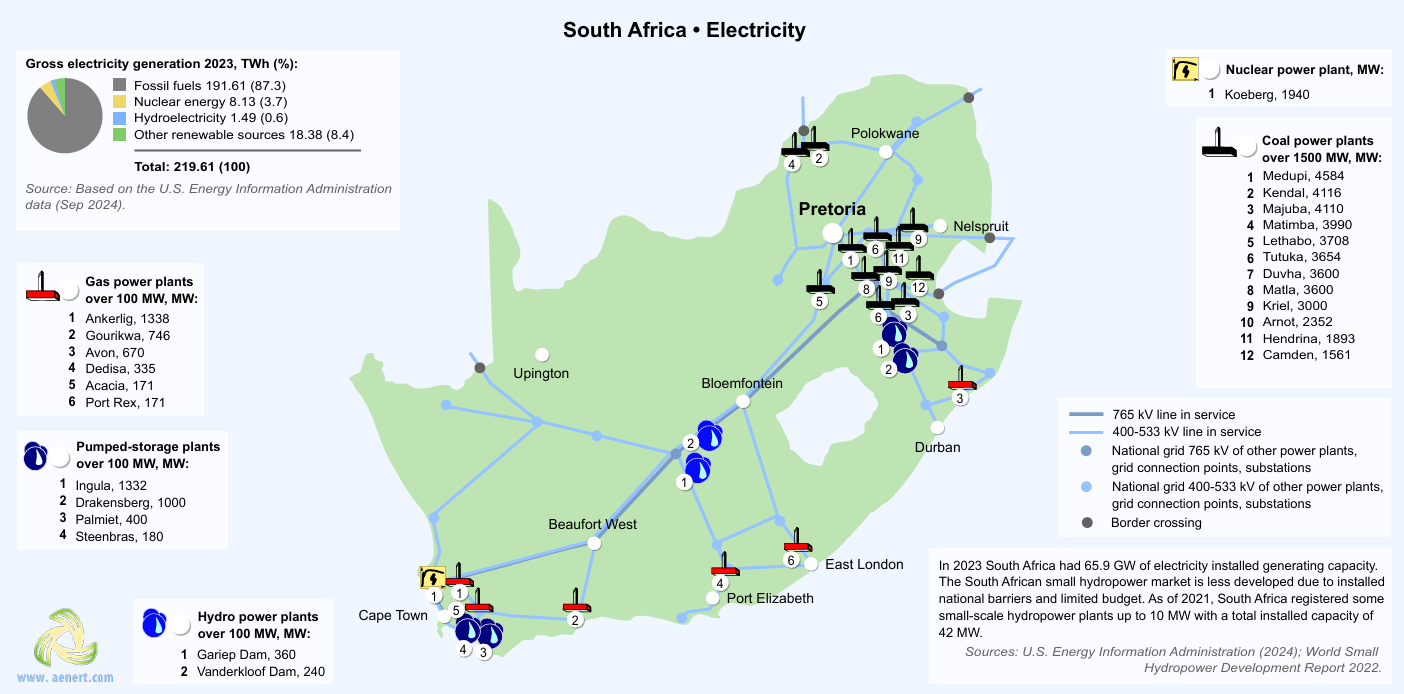
Eskom, South Africa's vertically integrated national utility, generates approximately 90% of South Africa's electricity from a fleet dominated by aging coal power stations. Chronic plant unavailability has driven load-shedding — scheduled rolling blackouts in defined stages (Stage 1 = 1,000 MW deficiency to Stage 8 = 8,000 MW deficiency) — that have become a structural feature of South African commercial and industrial life since 2019.
NERSA (National Energy Regulator of South Africa) regulates electricity tariffs and licensing. DMRE (Department of Mineral Resources and Energy) sets energy policy and administers the REIPPPP procurement programme. The Electricity Regulation Act (ERA) and its 2022 amendments enabling embedded generation and wheeling have created the legal framework for a growing private generation market.
South Africa's Carbon Tax Act (2019) imposes a carbon price on large emitters — including mines, smelters, and large industrial facilities — at a rate that increases annually. The carbon price creates a direct financial incentive for fuel switching away from diesel and grid-imported coal electricity, adding to the business case for on-site renewable energy that HOMER Grid and HOMER Pro model.
C&I, load-shedding resilience, and wheeling
South Africa's load-shedding crisis has made on-site solar-plus-storage not merely an economic choice but an operational necessity for most C&I businesses. HOMER Grid models the South African C&I scenario: grid import at Eskom or municipal tariff during available periods, SSEG (Small Scale Embedded Generation) feed-in under NERSA-approved tariffs, and battery backup to maintain critical loads during load-shedding events. The battery sizing for C&I in South Africa is primarily driven by backup duration requirements — how many hours of full or partial load support at a given stage of load-shedding — rather than pure energy economics.
Wheeling — the transmission of privately generated electricity across the Eskom network to a remote consumption point — was legalised by the 2022 ERA amendments and has enabled the first corporate Power Purchase Agreements across Eskom lines in South Africa. Large C&I consumers and municipalities are contracting directly with IPPs (Independent Power Producers) for solar PPA supply, transmitted via wheeling. HOMER Grid models the wheeling tariff cost, line losses, and time-of-delivery matching in these PPA structures.
REIPPPP and BESIPPPP
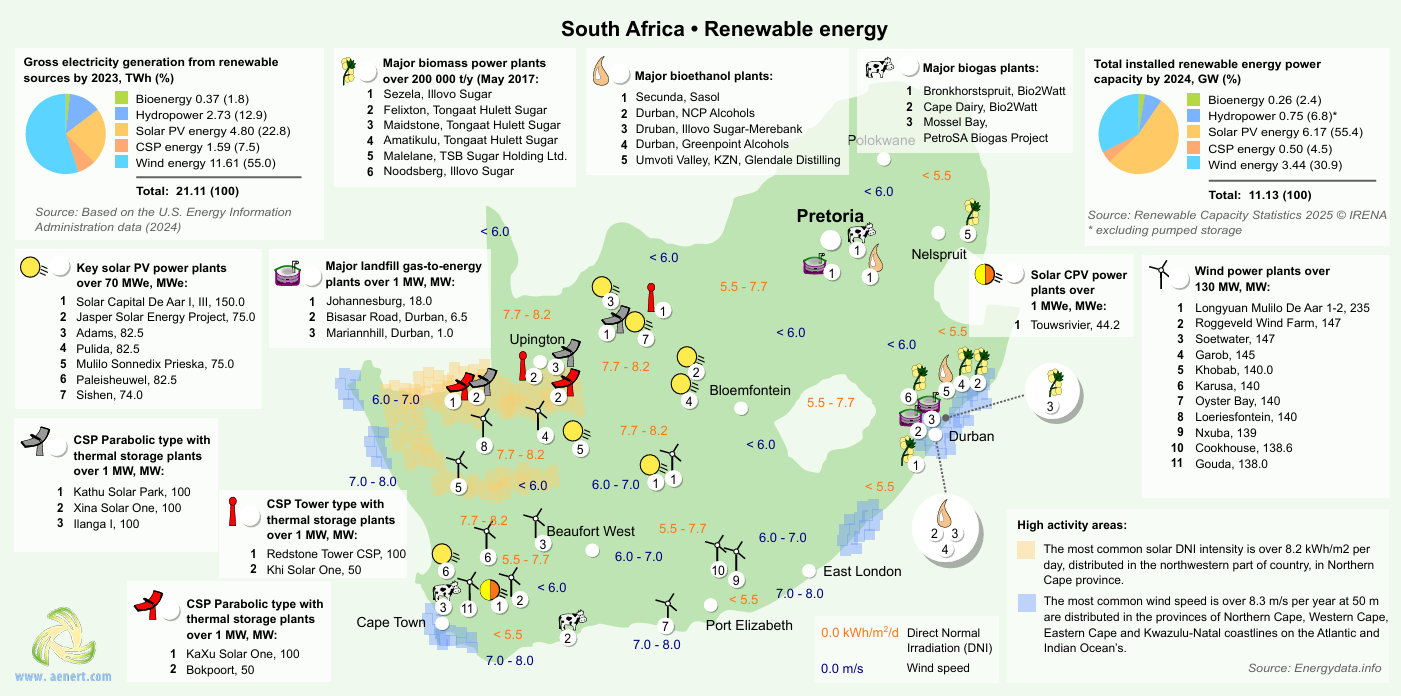
The Renewable Energy Independent Power Producer Procurement Programme (REIPPPP) is South Africa's primary utility-scale renewable procurement mechanism — it has procured approximately 6.4 GW across wind, solar PV, and CSP in Bid Windows 1–5 and subsequent rounds. REIPPPP projects sell to Eskom under 20-year Power Purchase Agreements at tariffs determined through competitive auction.
The Battery Energy Storage Independent Power Producer Procurement Programme (BESIPPPP) is REIPPPP's storage-specific companion — procuring standalone BESS capacity to firm the grid and reduce load-shedding. HOMER Front models BESIPPPP assets against their PPA dispatch obligations and any ancillary service obligations under the Eskom Grid Code. South Africa's grid code ancillary service framework is less mature than Europe's, but NERSA is actively developing frequency response and reserve markets.
Platinum and gold mining microgrids
South Africa's Bushveld Complex hosts the world's largest platinum group metal (PGM) reserves. Anglo American Platinum (Amplats), Impala Platinum (Implats), Northam Platinum, and Sibanye-Stillwater operate mines across the Rustenburg, Bafokeng, and Waterberg areas. The Witwatersrand Basin hosts Sibanye-Stillwater's gold mines in West Rand, South Rand, and Klerksdorp.
South African mining operations are among the world's most electricity-intensive: deep-level mining requires large refrigeration plants, hoisting equipment, and compressed air systems. Load-shedding disrupts mining operations directly — shaft hoisting and ventilation systems cannot be safely interrupted without extensive preparation. This has driven mining companies to invest in on-site generation and storage at an accelerating rate. Anglo American's FutureSmart Mining programme targets a 30% reduction in energy intensity; Sibanye-Stillwater has committed to 100% renewable energy for its SA operations by 2030.
HOMER Pro models South African mine-site microgrids with Eskom grid connection (subject to load-shedding), on-site solar and wind generation, battery storage for load-shedding resilience, and diesel backup for extended outages. The Carbon Tax Act exposure adds a carbon cost dimension to fuel-switch decisions that HOMER Pro captures in its economic modelling.
Selected HOMER research in South Africa
View full bibliography →Research from South African institutions on microgrid planning and rural electrification that used HOMER, drawn from the HOMER bibliography of 1,000+ publications.
-
Planning of a Sustainable Microgrid System Using HOMER Software
Motjoadi, V., Adetunji, K.E. & Joseph, M.K. (2020). IEEE conference proceedings. (University of South Africa)
-
Feasibility Study of a Hybrid PV-micro Hydro System for Rural Electrification
Kusakana, K., Munda, J.L. & Jimoh, A.A. (2009). IEEE AFRICON 2009. (Tshwane University of Technology)