Asia-Pacific — Australia
HOMER software for energy projects in Australia
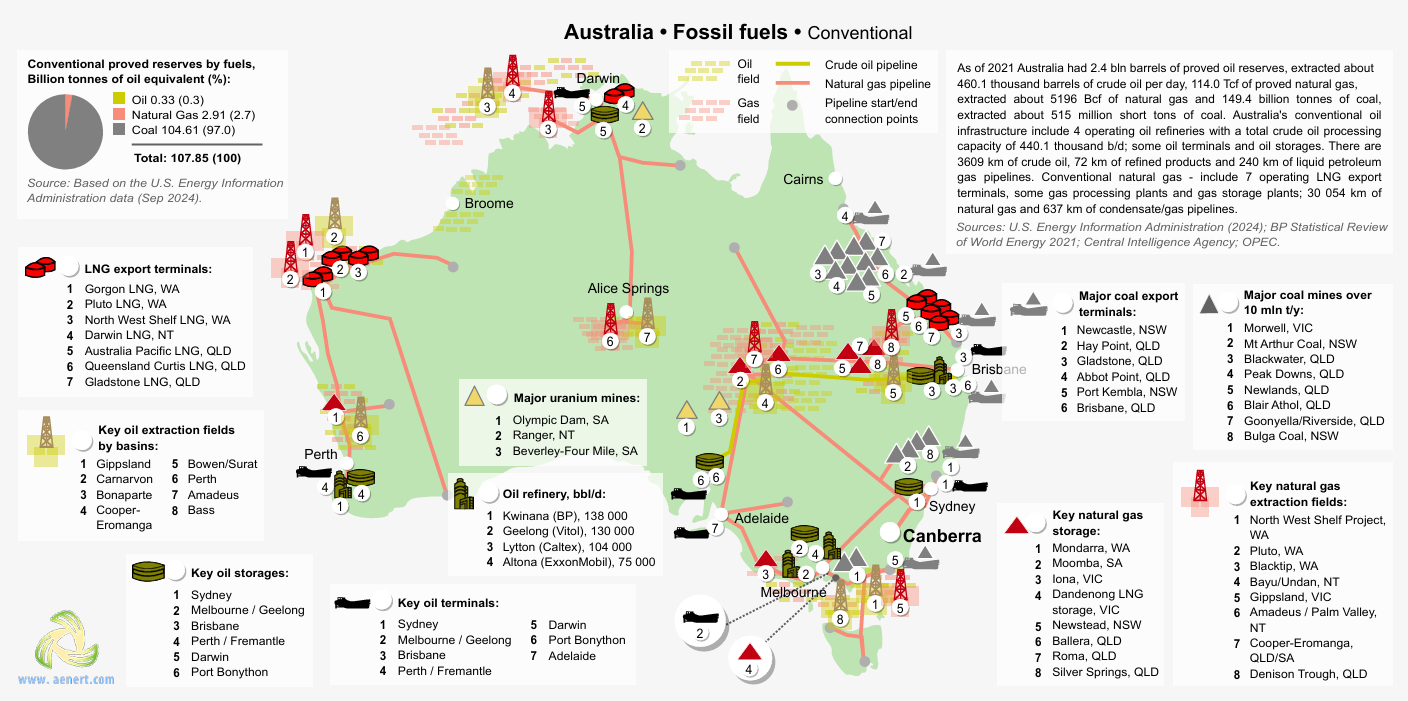
Australia's energy transition spans three distinct contexts: the NEM (National Electricity Market) with its world-leading grid-scale BESS deployments and FCAS market, the Pilbara and WA remote mining regions with the world's largest off-grid industrial microgrids, and thousands of remote indigenous communities across the Northern Territory, Queensland, and Western Australia.
Australia's energy market context
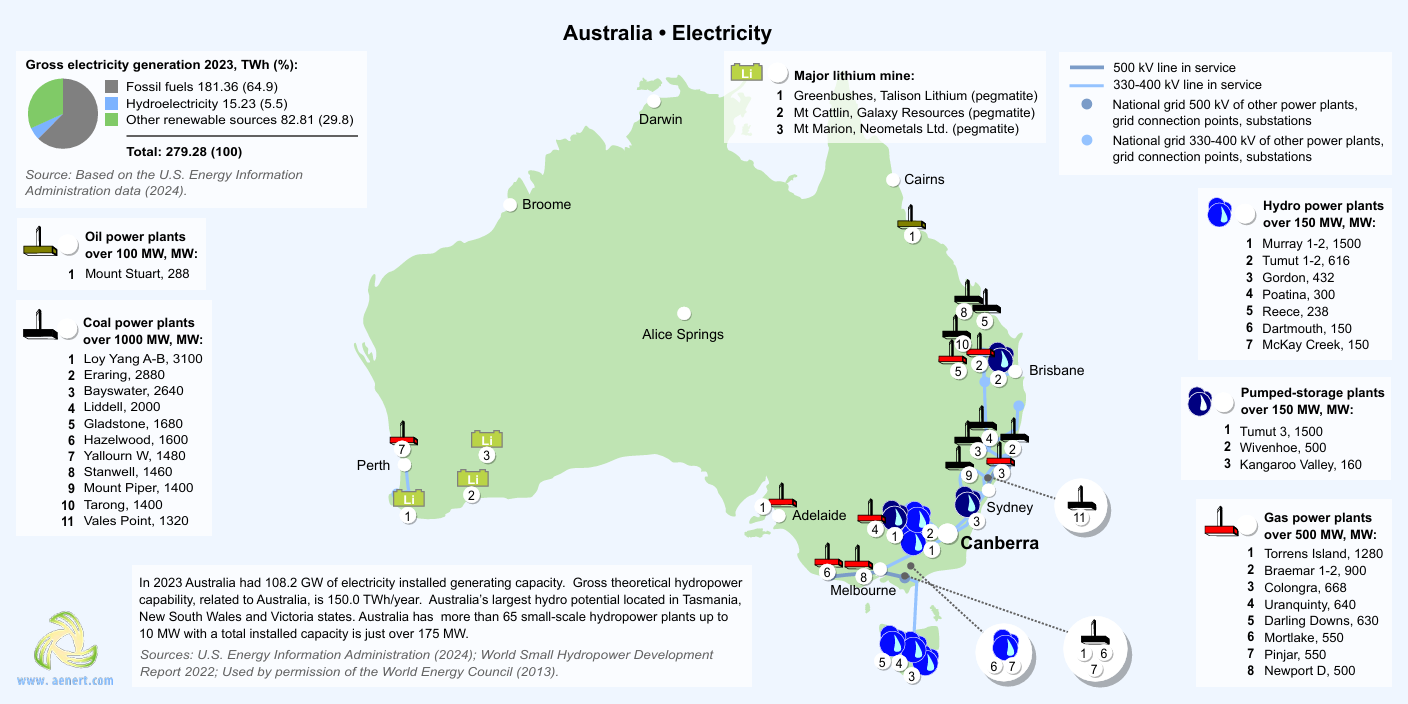
The National Electricity Market (NEM) spans Queensland, New South Wales, Victoria, South Australia, Tasmania, and the ACT. AEMO (Australian Energy Market Operator) dispatches the NEM in 5-minute intervals and administers FCAS (Frequency Control Ancillary Services) — eight distinct products covering raise and lower services across three time frames (fast, slow, delayed). The NEM has among the world's highest renewable penetration by instantaneous fraction, making FCAS a critical and well-compensated service.
Western Australia's South West Interconnected System (SWIS) is administered by AEMO under a separate market framework (the WEM — Wholesale Electricity Market). The Pilbara region is entirely off-grid, served by vertically integrated private utilities operated by BHP, Rio Tinto, Fortescue, and electricity retailers Horizon Power and Alinta Energy.
ARENA (Australian Renewable Energy Agency) and CEFC (Clean Energy Finance Corporation) co-fund large-scale renewable and storage projects. The Safeguard Mechanism — Australia's carbon pricing framework for large industrial facilities — creates a carbon cost that increasingly factors into mine-site and heavy industry energy modelling.
NEM grid-scale BESS and FCAS
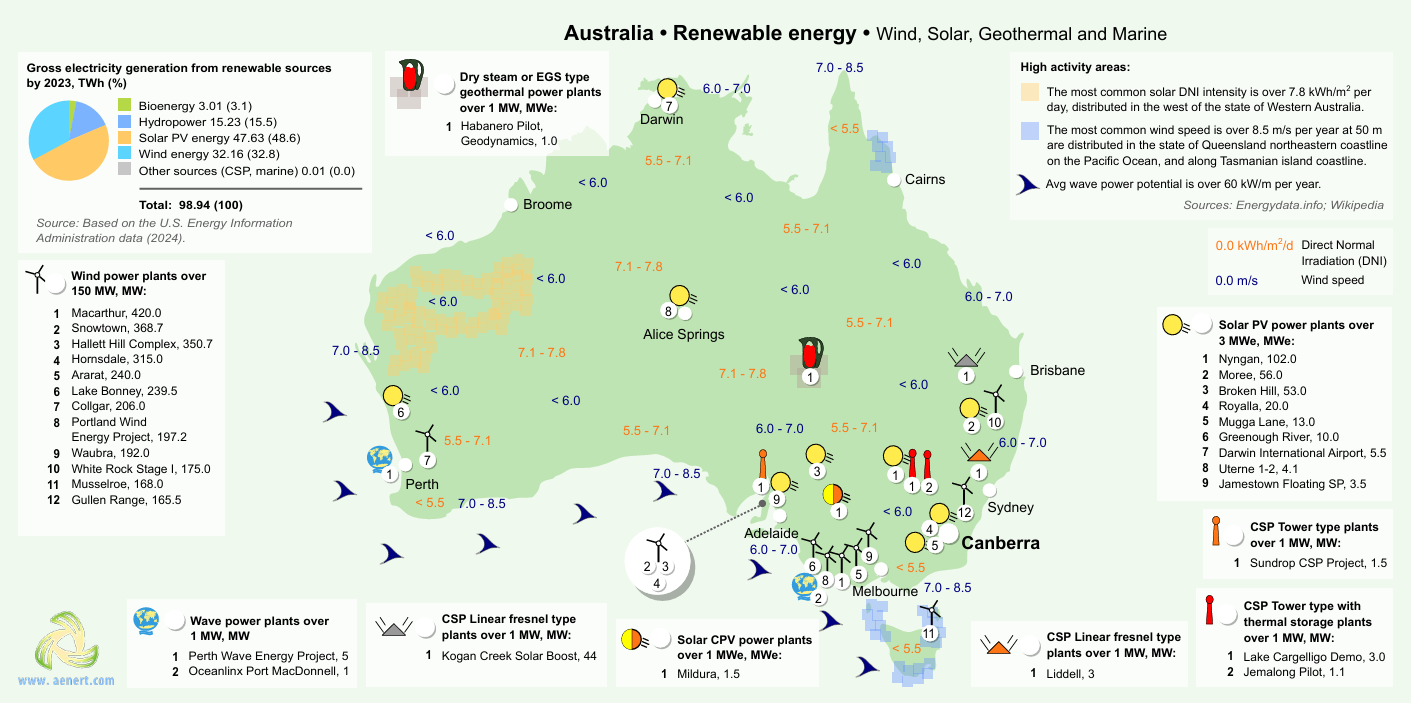
Australia's NEM hosts some of the world's largest grid-scale BESS deployments — Hornsdale Power Reserve (South Australia, 150/194 MW), Waratah Super Battery (New South Wales, 850 MW/1,680 MWh), and AGL's Liddell and Origin Energy projects. FCAS revenues — from the eight raise/lower products across fast (6 seconds), slow (60 seconds), and delayed (5 minutes) timeframes — are a central component of NEM BESS business cases.
HOMER Front models NEM BESS assets against 5-minute dispatch intervals, FCAS co-optimisation across multiple simultaneous products, and energy market participation under the NEM's spot and contract framework. The CIS (Capacity Investment Scheme) — which underwrites revenue risk for new firming capacity through long-term contracts with AEMO — provides a stable revenue floor that HOMER Front incorporates into NEM BESS valuations. REZs (Renewable Energy Zones) in NSW, Queensland, and Victoria create geographic concentrations of new renewable capacity that will require co-located storage at scale.
Pilbara mining microgrids
The Pilbara region of Western Australia hosts the world's largest concentration of off-grid industrial microgrids. BHP's Mining Area C and South Flank, Rio Tinto's iron ore operations, and Fortescue's Chichester Hub and Christmas Creek mine sites each operate isolated power systems in the GW scale. The decarbonisation of these systems — replacing diesel and gas generation with solar, wind, and battery storage — represents Australia's largest single industrial energy transition opportunity.
HOMER Pro models Pilbara mine-site microgrids at the operational scale required for these projects: large diesel and gas generator fleets with minimum stable generation constraints, industrial load profiles with demand peaks from crushers, conveyors, and processing plant, and the sizing of solar, wind, and battery storage for optimal dispatch. The Safeguard Mechanism carbon cost and Fortescue's stated FFI (Fortescue Future Industries) zero-carbon target by 2030 are driving active procurement.
Remote indigenous communities
Australia has approximately 1,200 remote and very remote communities, many served by diesel microgrids managed by state and territory government utilities: Horizon Power (WA), Power and Water Corporation (NT), Ergon Energy (Queensland remote). ARENA's Remote Area Energy Supply (RAES) programme and NT government targets for remote community renewables are driving the transition from diesel-only to hybrid solar-diesel-storage systems.
HOMER Pro is widely used by Australian remote community electrification planners. The specific requirements — very small community loads, high diesel logistics costs in remote NT and WA, sub-zero minimum temperatures for some communities, and the reliability requirements of communities with no fuel delivery alternative for weeks at a time — are all captured in HOMER Pro's technical modelling.
Australian market context
AEMO
Australian Energy Market Operator. Dispatches the NEM and WEM, administers FCAS procurement, and manages system security for the connected grids.
AER / AEMC
Australian Energy Regulator and Australian Energy Market Commission. Set network access rules, distribution tariffs, and market rule changes.
ARENA / CEFC
Australian Renewable Energy Agency and Clean Energy Finance Corporation. Co-fund large renewable, storage, and microgrid projects with grants and concessional finance.
Safeguard Mechanism
Australia's carbon pricing framework for large industrial facilities (above 100 kt CO₂-e). Sets baselines and requires large emitters to hold Australian Carbon Credit Units for excess emissions.
Selected HOMER research in Australia
View full bibliography →Peer-reviewed studies and theses that used HOMER to model energy systems in Australia, drawn from the HOMER bibliography of 1,000+ publications.
-
Optimal hybrid microgrid sizing framework for the mining industry with three case studies from Australia
Ellabban, O. & Alassi, A. (2021). IET Renewable Power Generation, vol. 15(2).
-
Case Study Feasibility Analysis of Renewable Energy Supply Options for Small to Medium-sized Tourist Accommodations
Dalton, G.J., Lockington, D.A. & Baldock, T.E. (2009). Renewable Energy, vol. 34(4).
-
Feasibility Analysis of Stand-alone Renewable Energy Supply Options for a Large Hotel
Dalton, G.J., Lockington, D.A. & Baldock, T.E. (2008). Renewable Energy, vol. 33(7).