Asia-Pacific — Indonesia
HOMER software for energy projects in Indonesia
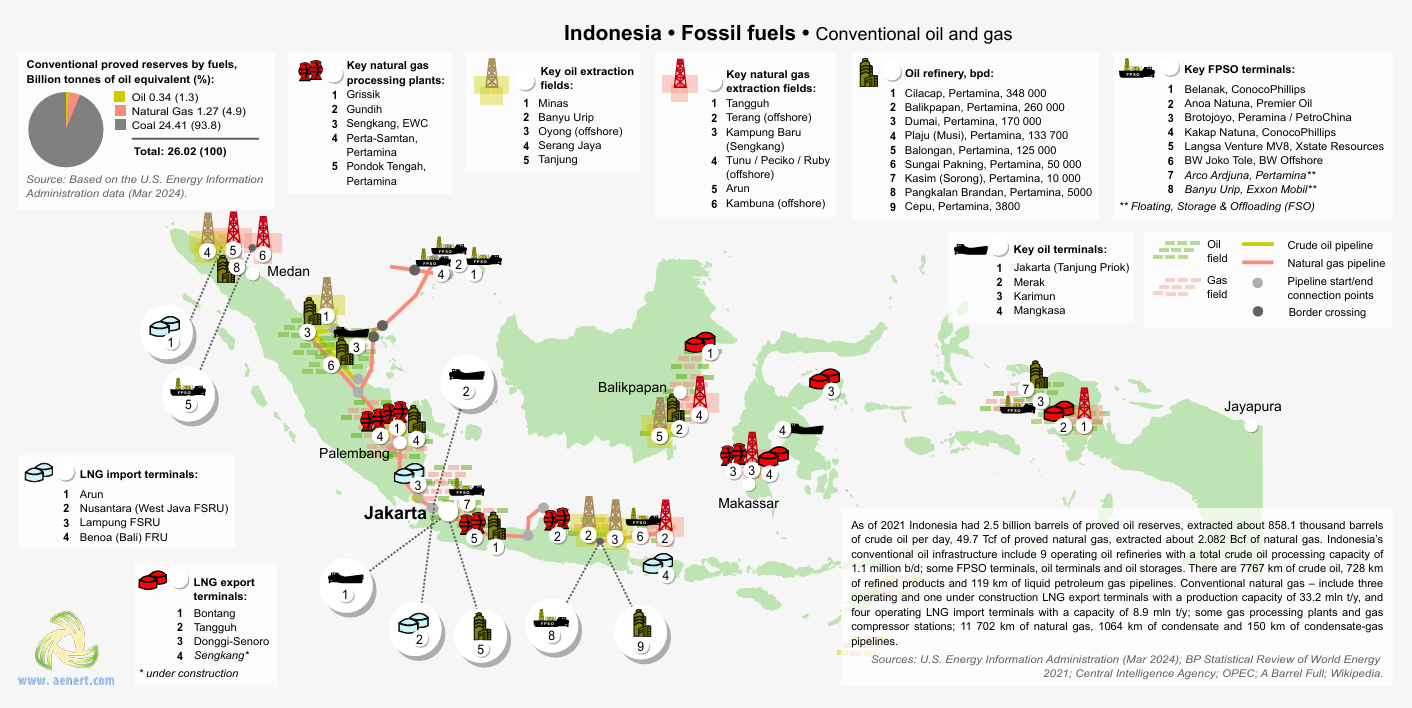
The world's largest archipelago presents one of the most complex energy planning challenges on earth: 17,000 islands, 2,000+ inhabited, coal-dominated generation on the main grid, and thousands of isolated diesel systems serving communities that PLN's network cannot reach. HOMER models all of them.
Indonesia's energy planning context
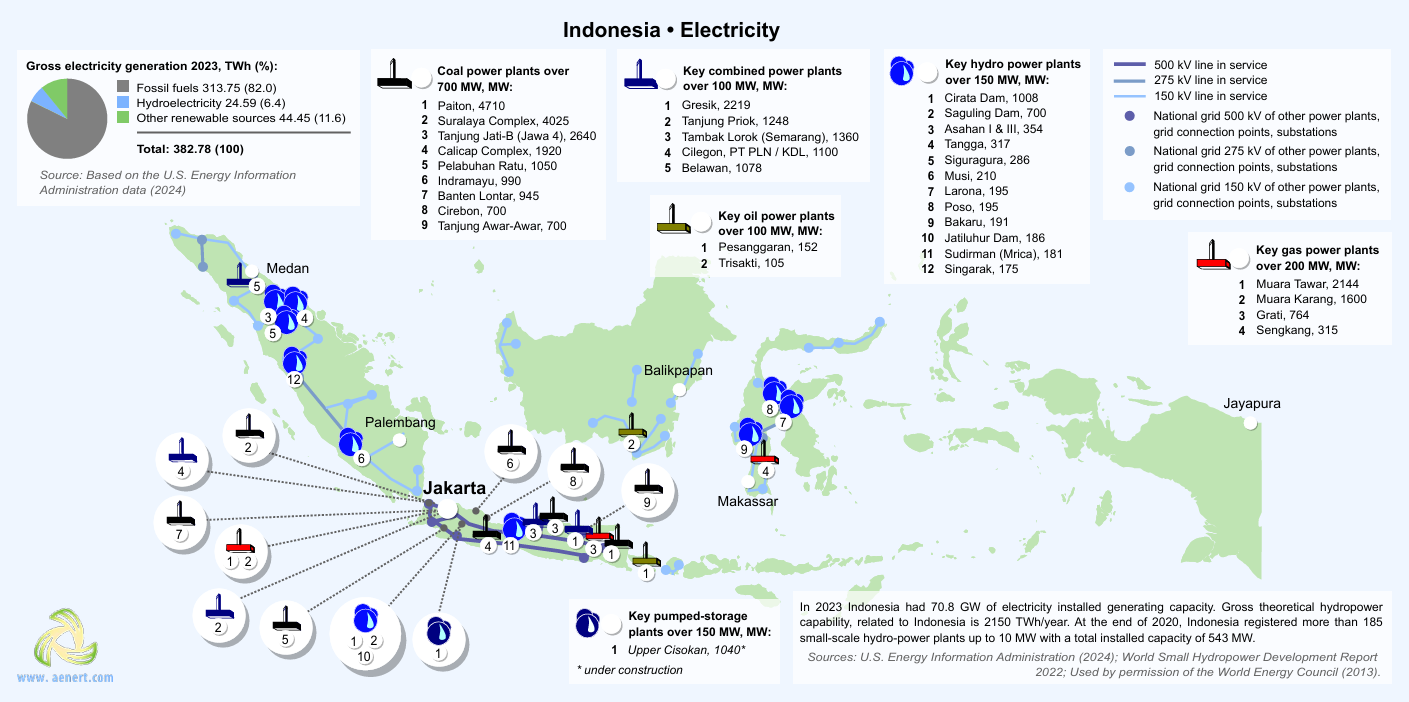
PLN (Perusahaan Listrik Negara), Indonesia's state utility, operates the national grid and manages the RUPTL (Rencana Usaha Penyediaan Tenaga Listrik) — the 10-year electricity supply business plan that governs all generation investment. Indonesia's 2021 RUPTL targets 23% renewable energy by 2025 and net zero by 2060. The shift from coal-dominated generation is the central challenge: coal accounts for approximately 60% of installed capacity on the Java-Bali grid, Indonesia's largest interconnected system.
Outside Java-Bali, the picture is radically different. The eastern islands — Maluku, Papua, Nusa Tenggara, Kalimantan's remote districts — are served by isolated diesel systems with electricity costs 3–5x the Java-Bali tariff. PLN's T2A (Penyediaan Tenaga Listrik Terpencil) programme and KESDM (Ministry of Energy and Mineral Resources) programmes target renewable energy for these systems, creating a large and growing HOMER Pro use case.
Island grid electrification — HOMER Pro
PLN's non-interconnected island systems — serving communities across Maluku, Nusa Tenggara Timur, Papua, and the outer Kalimantan and Sulawesi districts — are among the most expensive electricity systems in the world. Diesel must be shipped across the Indonesian archipelago, often on irregular schedules, at delivered costs of IDR 15,000–25,000 per litre. HOMER Pro models the hybrid solar-diesel-battery systems that displace this fuel burden.
PLN's PLTS (Pembangkit Listrik Tenaga Surya) island solar programme and the KESDM T.A. electrification targets require feasibility models that meet PLN's internal engineering standards. The World Bank's ESMAP-funded Island Grids project in eastern Indonesia and ADB programmes across the archipelago use HOMER Pro as the standard modelling tool. HOMER's load characterisation — including productive use loads such as fisheries cold storage and agri-processing — captures the full economic case for donor-funded projects.
Mining and industrial microgrids — HOMER Pro
Indonesia is the world's largest nickel producer and a major exporter of coal, copper, and gold. Mining operations in Kalimantan (coal), Sulawesi (nickel), Papua (gold and copper — Freeport's Grasberg and PT Amman Mineral), and Bangka-Belitung (tin) operate in remote locations with no grid access. Diesel generation at these sites costs $0.30–$0.60/kWh. Solar, wind, and battery storage can displace 40–60% of this fuel load while improving reliability.
Indonesia's nickel processing sector — driven by the government's downstreaming policy requiring export of processed nickel rather than ore — is building large industrial power loads in Sulawesi and Maluku. These greenfield smelter and processing facilities require power system design from scratch, where HOMER Pro's hybrid optimisation identifies the least-cost generation mix for loads ranging from 50 to 500 MW.
Grid-scale renewables — HOMER Front and Grid
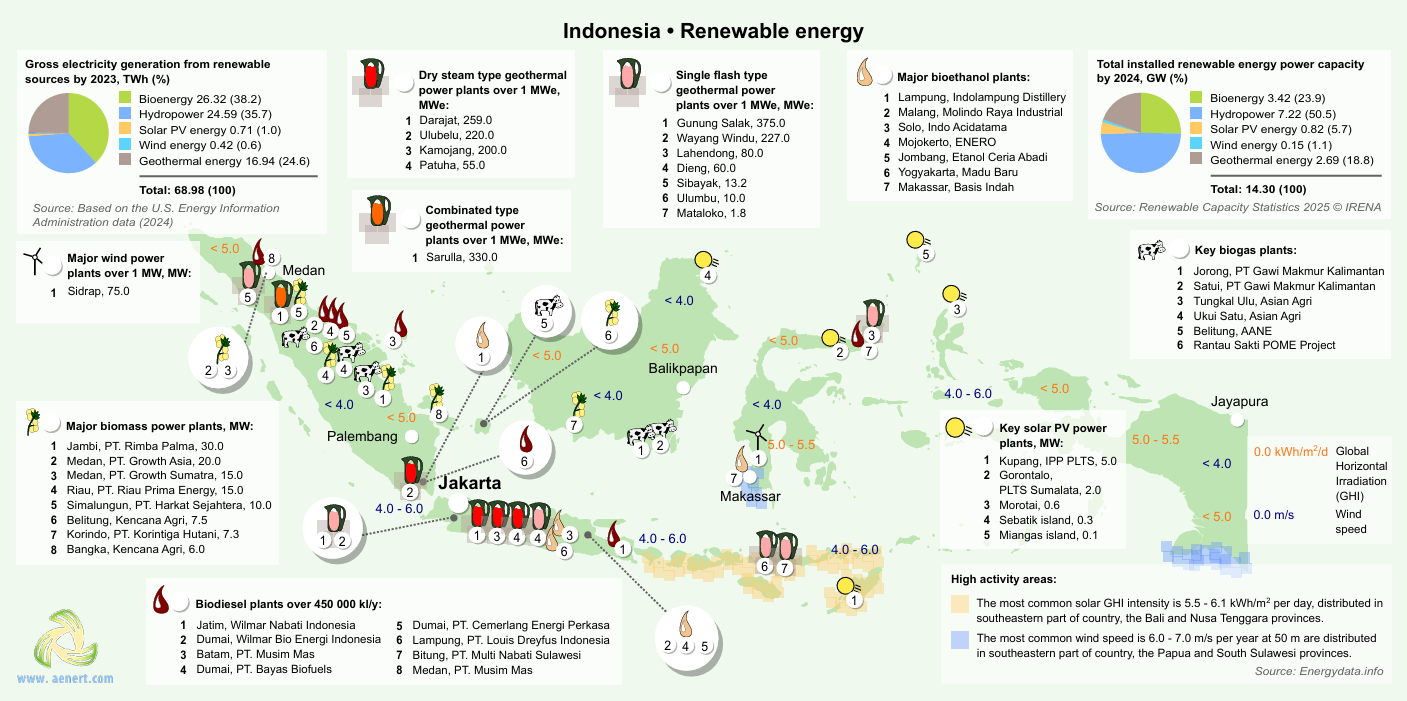
Indonesia's geothermal resource — the world's largest at an estimated 40% of global reserves — provides the primary baseload renewable option for the main Java-Bali grid. The MEMR (Ministry of Energy and Mineral Resources) tender process for geothermal, hydro, solar, and wind projects uses IRR-based assessments that HOMER Front's financial modelling supports. BESS co-location with utility-scale solar on Java and Bali is an emerging requirement as renewable penetration increases.
The PLN co-generation (PJBL) framework and BOOT (Build, Own, Operate, Transfer) contracts that govern IPP development in Indonesia require bankable feasibility models. Indonesian EPCs and developers modelling projects for PLN offtake agreements use HOMER to produce the generation profile and financial outputs that PLN's engineering review process requires.
Indonesian market context
PLN (Perusahaan Listrik Negara)
State electricity utility with a monopoly on transmission and distribution. Operates the RUPTL and all interconnected and isolated grid systems. The primary counterparty for any grid-connected or hybrid power project in Indonesia.
KESDM (Ministry of Energy and Mineral Resources)
Sets energy policy, issues mining and energy licenses, and governs the RUPTL process. MEMR Regulation 26/2021 governs renewable energy procurement.
RUPTL (Electricity Supply Business Plan)
PLN's 10-year rolling electricity supply plan. Sets the generation investment pipeline, renewable targets, and grid expansion priorities. Revised every 1–2 years by KESDM.
World Bank ESMAP / ADB
Major funders of island electrification and rural energy access programmes across eastern Indonesia. Projects require HOMER-compatible feasibility documentation.
Foundational HOMER references
View full bibliography →HOMER is used for energy projects in Indonesia and over 190 countries worldwide. Its modelling methodology — developed at the U.S. National Renewable Energy Laboratory (NREL) — is documented in these foundational references. Browse the full bibliography for 1,000+ applied studies.
-
Computer Modeling of Renewable Power Systems
Lilienthal, P.D., Lambert, T.W. & Gilman, P. (2004). Encyclopedia of Energy, NREL Report CH-710-36771.
-
Using HOMER Software, NREL's Micropower Optimization Model, to Explore the Role of Gen-sets in Small Solar Power Systems (Case study: Sri Lanka)
Givler, T. & Lilienthal, P. (2005). NREL/TP-710-36774.
-
Review of software tools for hybrid renewable energy systems
Sinha, S. & Chandel, S.S. (2014). Renewable and Sustainable Energy Reviews, vol. 32.
Ready to model your Indonesian project?
From PLN island electrification programmes and Kalimantan mining microgrids to Java-Bali grid-scale storage, HOMER gives you the techno-economic analysis to make confident decisions.