Asia-Pacific — South Korea
HOMER software for energy projects in South Korea
South Korea has one of the world's largest ESS (Energy Storage System) deployment programmes under its Renewable Portfolio Standard, a large chaebol-driven C&I sector under aggressive RE100 and SBTi commitments, and a data centre industry that makes it one of Asia's largest behind-the-meter power consumers. HOMER models all three.
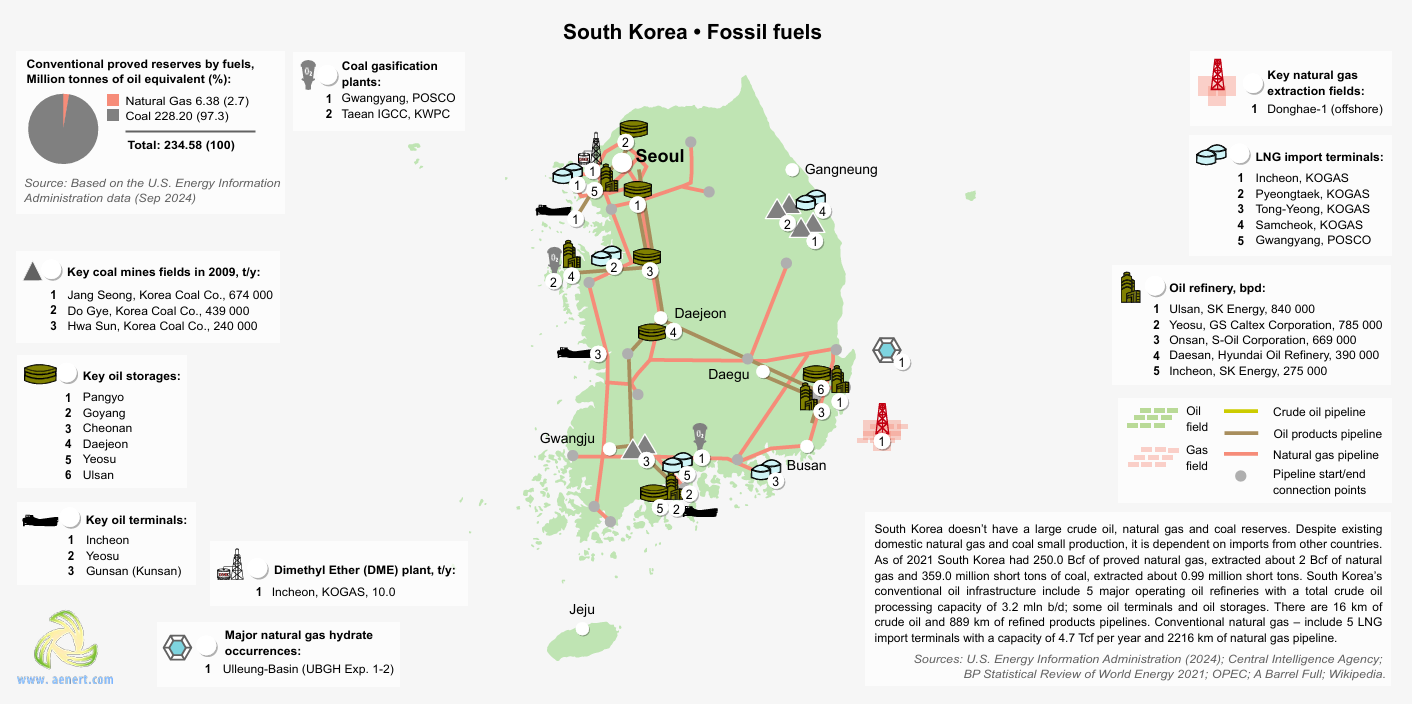
South Korea's energy transition context
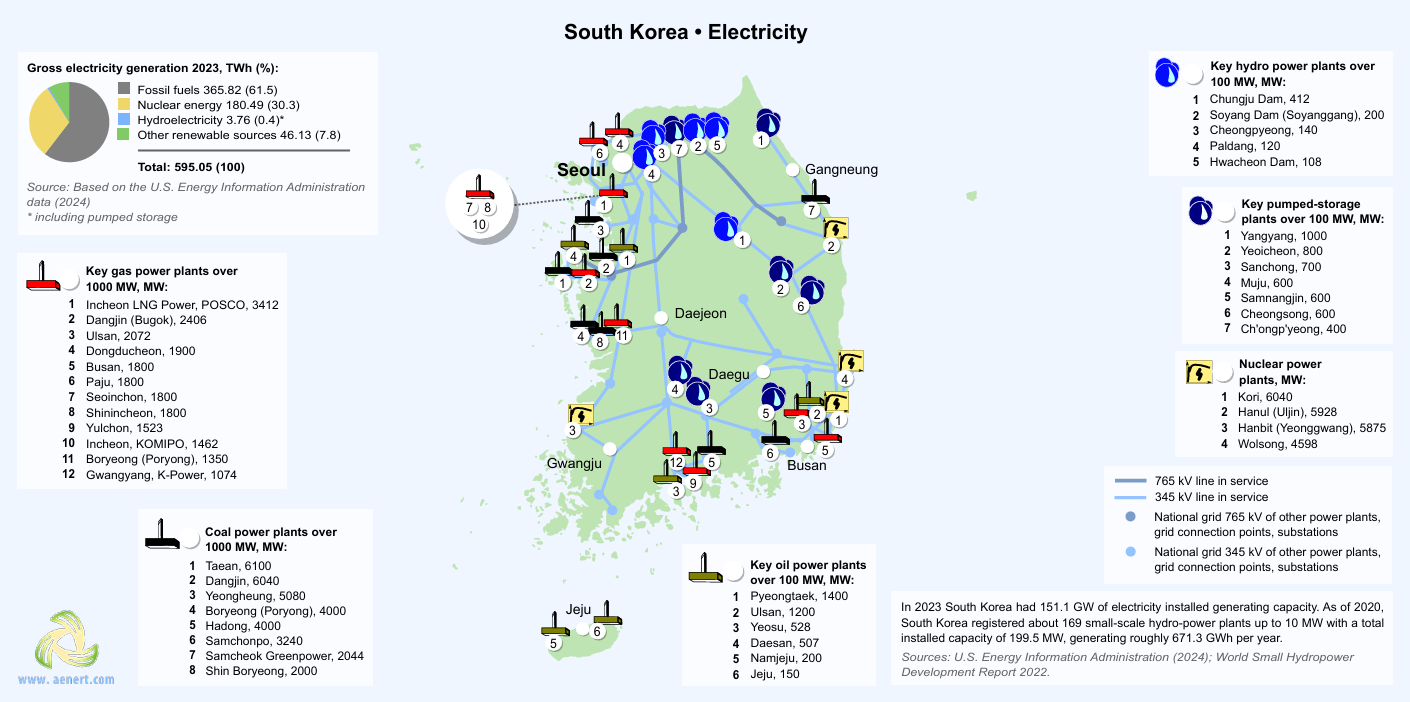
KEPCO (Korea Electric Power Corporation) operates the national grid through its six generation subsidiaries and the transmission network, with KPX (Korea Power Exchange) administering the electricity market. Korea's 10th Basic Plan for Electricity Supply and Demand (2023) targets 30% renewable electricity by 2030, up from approximately 9% in 2022. The government's Net Zero by 2050 commitment requires a structural shift from Korea's coal- and LNG-heavy generation fleet.
Korea's Renewable Portfolio Standard (RPS) obliges large generators to source a percentage of output from renewable energy or purchase Renewable Energy Certificates (RECs). The ESS REC multiplier scheme — introduced in 2016 and revised multiple times following fires in 2018–2019 — provides a premium REC value for ESS that charges from renewable generation, creating a co-location incentive. The recovered ESS market, with improved fire safety standards (K-Battery Safety Standard), is now growing rapidly again.
RPS ESS and grid-scale storage — HOMER Front
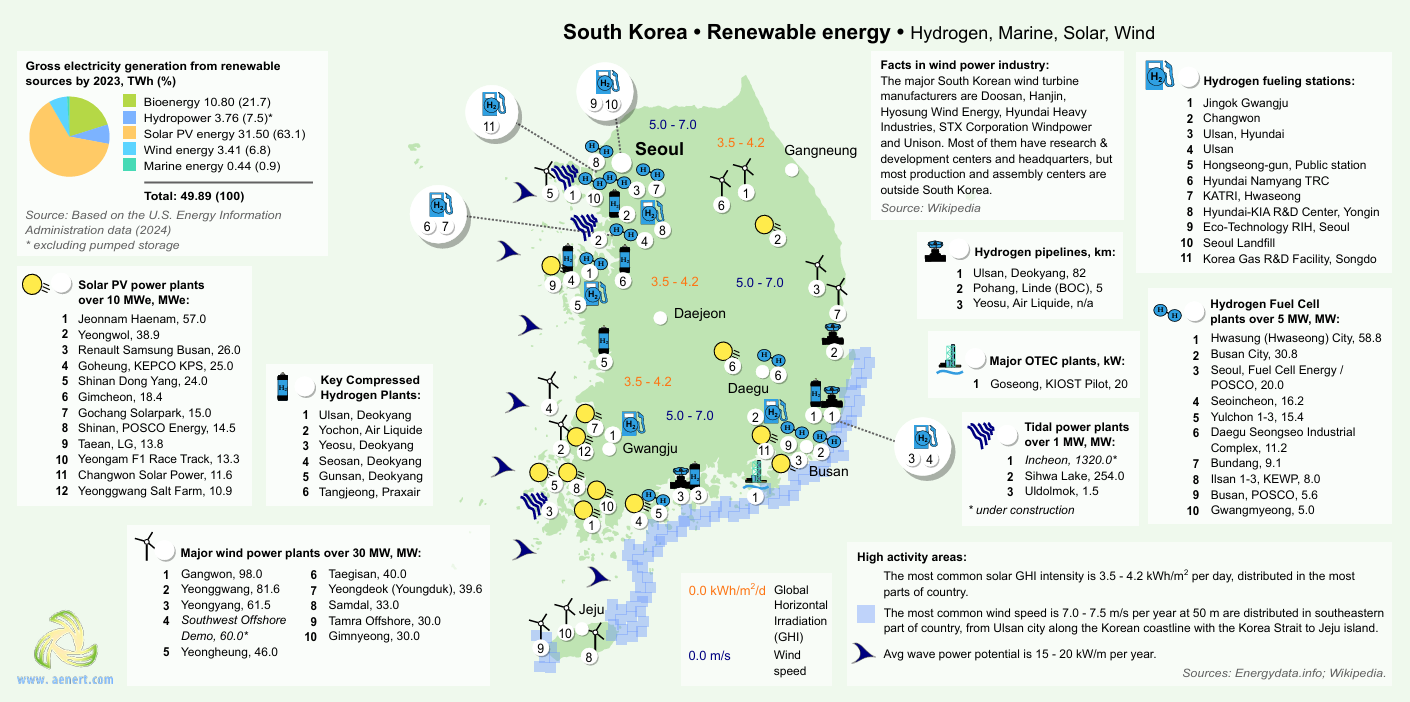
Korea's RPS ESS scheme creates a distinctive project structure: renewable generators install co-located BESS to earn a premium REC multiplier (historically 5.0x, adjusted over time) for stored and dispatched energy. HOMER Front models the Korean RPS ESS economics — solar or wind generation profiles, BESS charging from renewable generation, KPX SMP (System Marginal Price) dispatch, and REC revenue stacking.
Korea's offshore wind programme — centred on the Yellow Sea (West Sea) and Jeju Island, with GW-scale projects by KEPCO and private developers including SK E&S, Hanwha, and Equinor — requires co-located storage modelling for grid integration. HOMER Front's offshore wind capacity factor modelling and BESS co-optimisation are directly applicable to Korean offshore project feasibility.
Corporate RE100 and C&I — HOMER Grid
Korea's chaebol groups — Samsung, SK, LG, Hyundai, Lotte, Posco, and Hanwha — are among Asia's largest industrial electricity consumers. All of the major groups have made RE100 and SBTi commitments, creating significant demand for renewable electricity procurement and behind-the-meter generation. Samsung alone consumes approximately 25 TWh/year globally.
Korea's corporate PPA framework — allowing large consumers to sign direct renewable energy purchase agreements through KEPCO's intermediary structure — is still developing, but third-party PPAs and virtual PPAs (VPPAs) are increasingly available. HOMER Grid models the Korean corporate RE economics: rooftop solar under KEPCO's self-generation tariff structure, behind-the-meter BESS for demand peak shaving under time-of-use industrial tariffs, and the economics of corporate PPA versus self-generation.
Data centres and high-density loads — HOMER Grid
Korea is home to major hyperscale data centre campuses from Naver, Kakao, KT, and international operators including AWS, Google, and Microsoft. The Seoul Capital Area (SCA) — Gyeonggi Province, particularly Pangyo and the Incheon Free Economic Zone — hosts the highest concentration of data centre load. AI-driven expansion of Korean data centre capacity is creating grid connection constraints similar to those experienced in Northern Virginia and Dublin.
HOMER Grid models Korean data centre energy requirements: on-site generation (diesel UPS, fuel cell backup, solar where land is available), behind-the-meter BESS for demand management under KEPCO's industrial tariff structures, and the resilience economics of co-generation versus grid supply. Korean data centre operators under RE100 commitments are increasingly evaluating the cost of renewable self-sufficiency versus KEPCO renewable energy certificate purchases.
South Korean market context
KEPCO (Korea Electric Power Corporation)
State utility with monopoly over transmission, distribution, and retail. Operates through six generation subsidiaries (KOMIPO, KOSEP, KOSPO, KOGAS, etc.) and procures electricity through KPX.
KPX (Korea Power Exchange)
Administers the Korean electricity market. Sets SMP (System Marginal Price) and manages the RPS (Renewable Portfolio Standard) including REC issuance and trading.
RPS (Renewable Portfolio Standard)
Obligates generators above 500 MW to source a percentage of output from renewables or purchase RECs. The ESS REC multiplier scheme creates the co-location incentive for solar-plus-storage and wind-plus-storage projects.
MOTIE (Ministry of Trade, Industry and Energy)
Sets energy policy and administers the 10th Basic Plan for Electricity Supply and Demand. Governs the offshore wind licensing process and corporate PPA framework development.
Foundational HOMER references
View full bibliography →HOMER is used for energy projects in South Korea and over 190 countries worldwide. Its modelling methodology — developed at the U.S. National Renewable Energy Laboratory (NREL) — is documented in these foundational references. Browse the full bibliography for 1,000+ applied studies.
-
Computer Modeling of Renewable Power Systems
Lilienthal, P.D., Lambert, T.W. & Gilman, P. (2004). Encyclopedia of Energy, NREL Report CH-710-36771.
-
Using HOMER Software, NREL's Micropower Optimization Model, to Explore the Role of Gen-sets in Small Solar Power Systems (Case study: Sri Lanka)
Givler, T. & Lilienthal, P. (2005). NREL/TP-710-36774.
-
Review of software tools for hybrid renewable energy systems
Sinha, S. & Chandel, S.S. (2014). Renewable and Sustainable Energy Reviews, vol. 32.
Ready to model your Korean project?
Whether you're developing an RPS ESS co-location project, modelling C&I solar-storage for a chaebol facility, or designing a data centre energy strategy, HOMER gives you the rigorous analysis your investors require.