Asia-Pacific — Vietnam
HOMER software for energy projects in Vietnam
Vietnam installed more solar capacity in 2019–2020 than most countries have in total, then faced severe curtailment. The transition from feed-in tariff to competitive DPPA auctions, combined with one of Southeast Asia's fastest-growing industrial electricity loads, makes Vietnam one of the region's most active HOMER use cases.
Vietnam's energy planning context
EVN (Vietnam Electricity) is the state utility and single buyer for all grid-connected generation. Vietnam's Power Development Plan 8 (PDP8, approved 2023) sets out an ambitious transition: coal capacity is capped and existing plants retired from 2030; offshore wind targets reach 6 GW by 2030 and 70+ GW by 2050; onshore wind and solar expand significantly. The PDP8 also requires 10.4 GW of battery storage by 2030 to manage the renewable-heavy system.
The direct power purchase agreement (DPPA) pilot framework — allowing large industrial consumers to purchase renewable energy directly from generators — was launched in 2024 after years of regulatory development. This creates a new commercial structure for C&I renewable procurement in Vietnam's industrial park-dominated economy, where multinational manufacturers in the electronics, textile, and furniture sectors face increasing pressure from global supply chain decarbonisation requirements.
Utility-scale solar, wind, and storage — HOMER Front
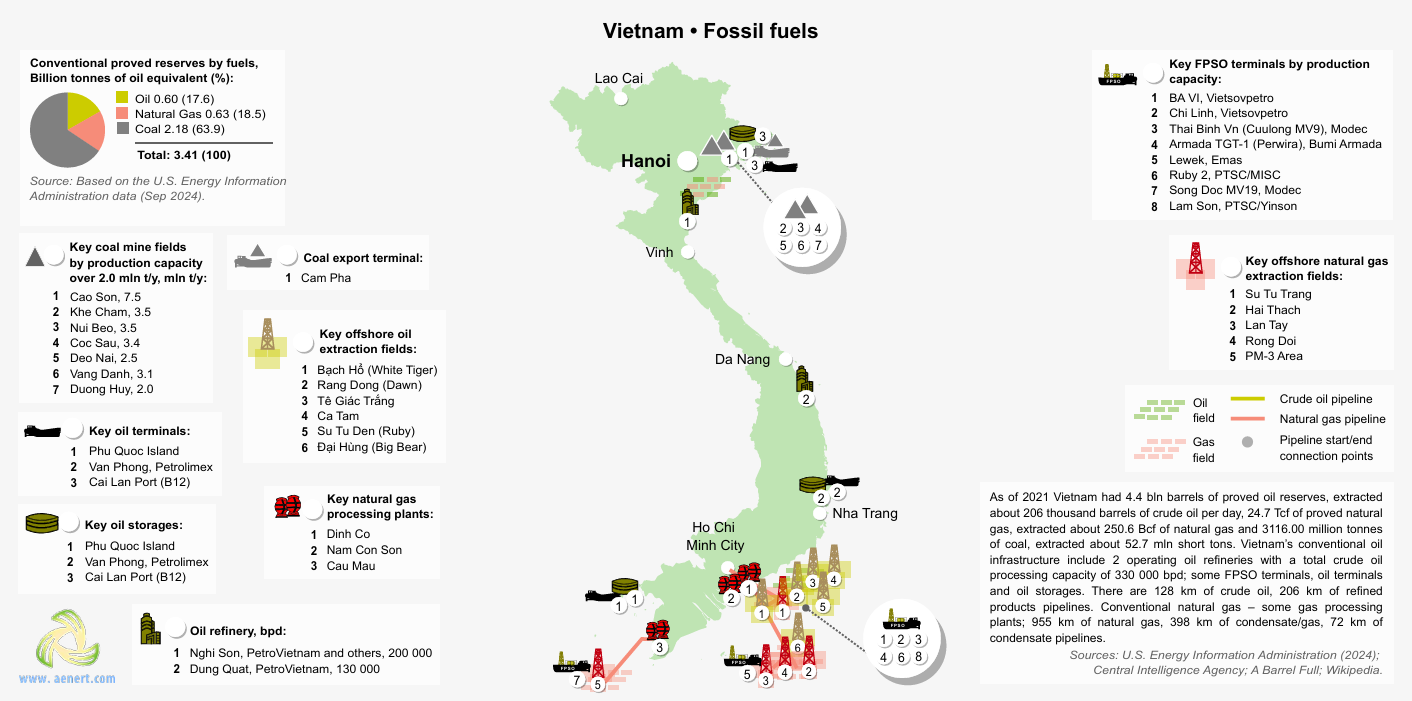
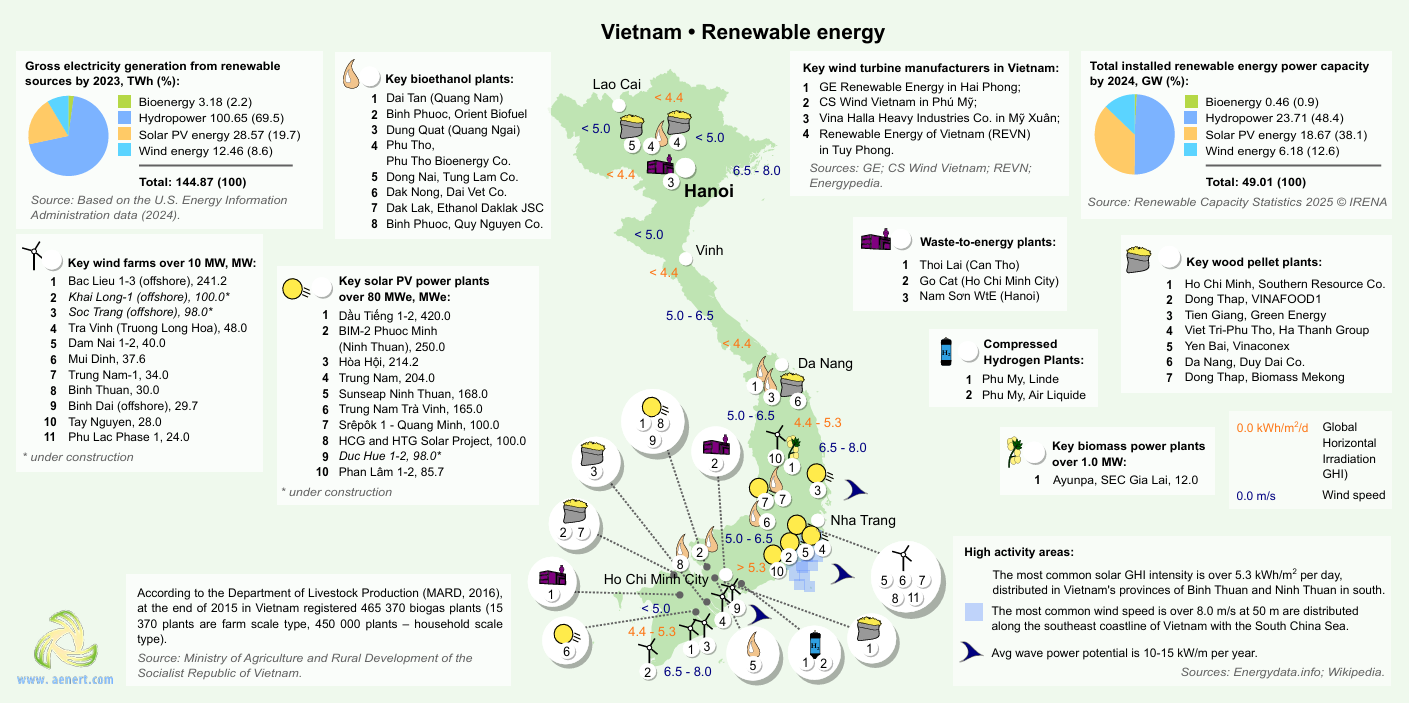
Vietnam's feed-in tariff era (FiT1: 2017–2019, FiT2: 2019–2021) produced rapid deployment of ground-mounted solar in the south-central coast provinces — Ninh Thuận, Bình Thuận, and the Central Highlands — where irradiance levels exceed 1,800 kWh/m²/year. Curtailment reached 30–40% in the highest-penetration regions due to grid constraint.
Under PDP8's competitive tender framework, new projects require co-located storage to manage grid injection constraints and improve dispatchability. HOMER Front models Vietnamese utility-scale solar and wind assets against EVN's grid connection conditions, curtailment risk curves, and the evolving auction contract structure. Offshore wind — concentrated in the south-central provinces and the Gulf of Tonkin — is a major component of PDP8 and requires sophisticated capacity factor and ancillary service modelling.
Industrial parks and C&I — HOMER Grid
Vietnam's manufacturing sector — electronics (Samsung, Intel, LG), textiles, footwear, and furniture — is concentrated in industrial parks (KCN) across Binh Duong, Dong Nai, Long An, Hanoi, and Hai Phong. These industrial parks represent some of the highest electricity demand densities in Southeast Asia, with individual parks consuming hundreds of megawatts at peak.
The DPPA framework allows large industrial consumers (initially above 200 kW, expanding under MOIT guidance) to procure renewable energy directly from qualifying generators. HOMER Grid models the C&I economics: rooftop solar, behind-the-meter BESS, DPPA purchase agreements, and EVN time-of-use tariff optimisation. Multinational manufacturers under RE100 and SBTi commitments are active drivers of demand for DPPA modelling in Vietnam.
Grid stability and battery storage — HOMER Front
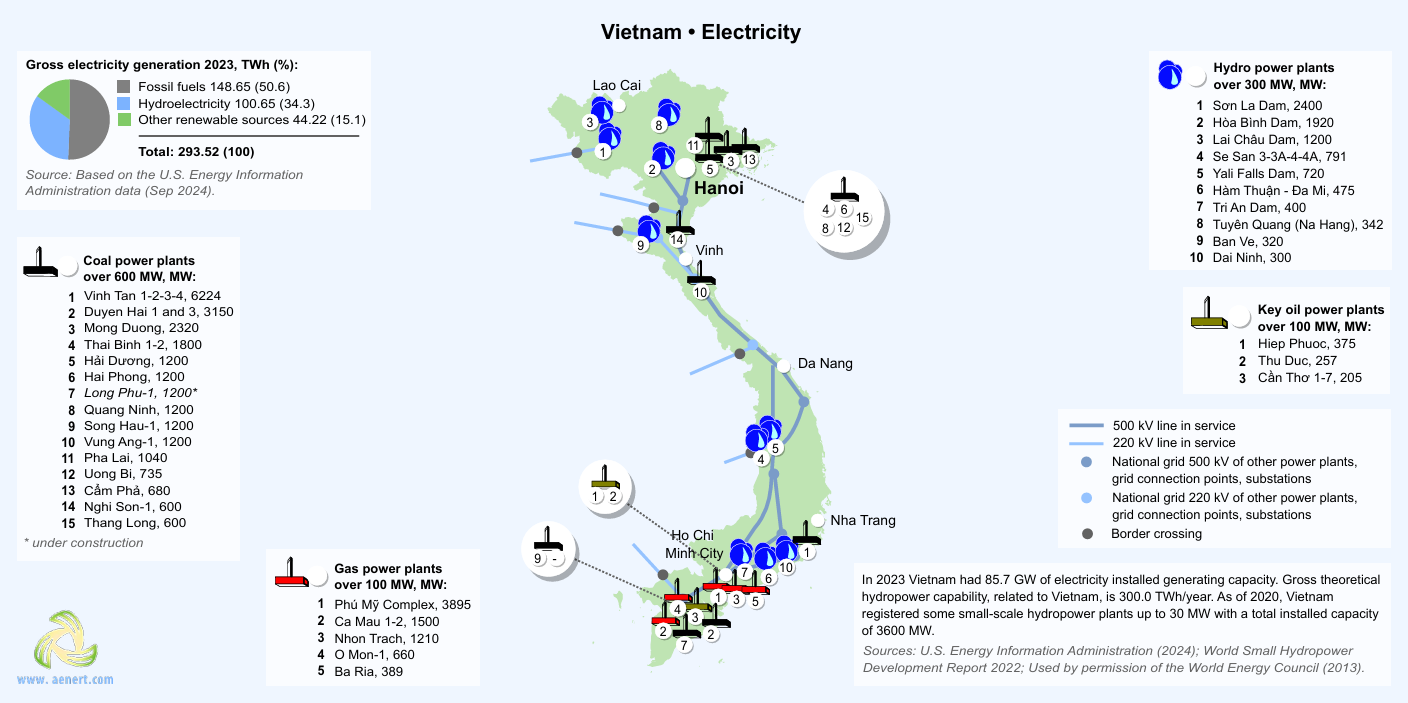
PDP8 mandates 10.4 GW of battery storage by 2030. EVN and NLDC (National Load Dispatch Center) are working through the technical and commercial frameworks for BESS procurement — capacity payments, ancillary service products, and the integration of storage into EVN's merit-order dispatch. Vietnam's grid faces significant north-south transmission constraints, making regional storage deployment a priority.
HOMER Front models the Vietnamese BESS investment case: grid-scale storage paired with curtailed solar capacity in the south-central region, pumped hydro integration in the Central Highlands, and utility BESS for frequency regulation on the national grid. The combination of high curtailment risk and PDP8 storage mandates creates one of Southeast Asia's most active BESS project pipelines.
Vietnamese market context
EVN (Vietnam Electricity)
State utility and single buyer for all grid-connected generation. Operates through five regional utilities (EVN NPT for transmission, EVNHCM, EVNHANOI, etc.). Primary counterparty for all PPA and grid connection negotiations.
MOIT (Ministry of Industry and Trade)
Sets electricity and renewable energy policy, administers the DPPA framework, and governs industrial electricity tariffs.
PDP8 (Power Development Plan 8)
Vietnam's 2023 national electricity master plan to 2030, with a vision to 2050. Sets renewable targets, storage mandates, coal retirement timeline, and grid investment priorities.
DPPA (Direct Power Purchase Agreement)
Framework allowing large industrial consumers to purchase renewable electricity directly from generators, bypassing EVN. Launched as a pilot in 2024; expected to expand under MOIT guidance.
Foundational HOMER references
View full bibliography →HOMER is used for energy projects in Vietnam and over 190 countries worldwide. Its modelling methodology — developed at the U.S. National Renewable Energy Laboratory (NREL) — is documented in these foundational references. Browse the full bibliography for 1,000+ applied studies.
-
Computer Modeling of Renewable Power Systems
Lilienthal, P.D., Lambert, T.W. & Gilman, P. (2004). Encyclopedia of Energy, NREL Report CH-710-36771.
-
Using HOMER Software, NREL's Micropower Optimization Model, to Explore the Role of Gen-sets in Small Solar Power Systems (Case study: Sri Lanka)
Givler, T. & Lilienthal, P. (2005). NREL/TP-710-36774.
-
Review of software tools for hybrid renewable energy systems
Sinha, S. & Chandel, S.S. (2014). Renewable and Sustainable Energy Reviews, vol. 32.
Ready to model your Vietnamese project?
Whether you're modelling a utility-scale BESS project under PDP8, a DPPA procurement for an industrial park, or a behind-the-meter system for a manufacturing facility, HOMER gives you the analysis your lenders and offtakers require.