Latin America — Argentina
HOMER software for energy projects in Argentina
Argentina’s Patagonian wind resource — consistently classed among the world’s best — and its northern solar belt combine with the Vaca Muerta shale formation’s oil and gas operations to create a distinctive energy modelling landscape. The RenovAr and MATER frameworks have contracted gigawatts of renewables; Ley 27.424 has created a prosumer C&I market; and Patagonian wind-diesel-BESS hybrids are transforming isolated Andean communities.
Argentina’s electricity sector
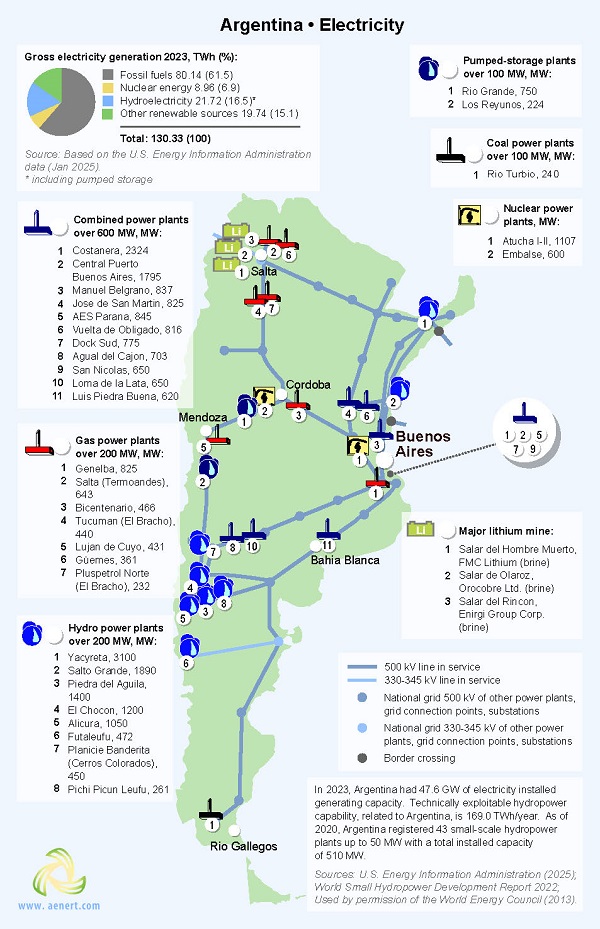
Argentina’s wholesale electricity market (MEM) is operated by CAMMESA (Compañía Administradora del Mercado Mayorista Eléctrico Sociedad Anónima) under the oversight of ENRE (Ente Nacional Regulador de la Electricidad) for the national transmission grid, and provincial regulators for distribution. MINEM (Ministerio de Energía y Minería) sets energy policy. Argentina’s electricity matrix is dominated by gas-fired generation (approximately 60%), with hydro (Comahue region, Patagonian rivers), nuclear (Atucha, Embalse), and a rapidly growing renewable sector.
The RenovAr programme (rounds 1, 1.5, 2, and 3, 2016–2019) contracted approximately 4.7 GW of renewable capacity under 20-year USD-denominated CAMMESA PPAs. The MATER (Mercado a Término de Energías Renovables) framework allows large consumers above 300 kW to contract renewable energy directly from generators, creating bilateral PPAs outside the regulated PPA structure. Argentina’s macroeconomic volatility — peso devaluation, inflation, and energy subsidy reform — creates specific project finance challenges that HOMER’s scenario analysis framework addresses through multi-currency dispatch modelling.
RenovAr, MATER, and utility-scale renewables — HOMER Front
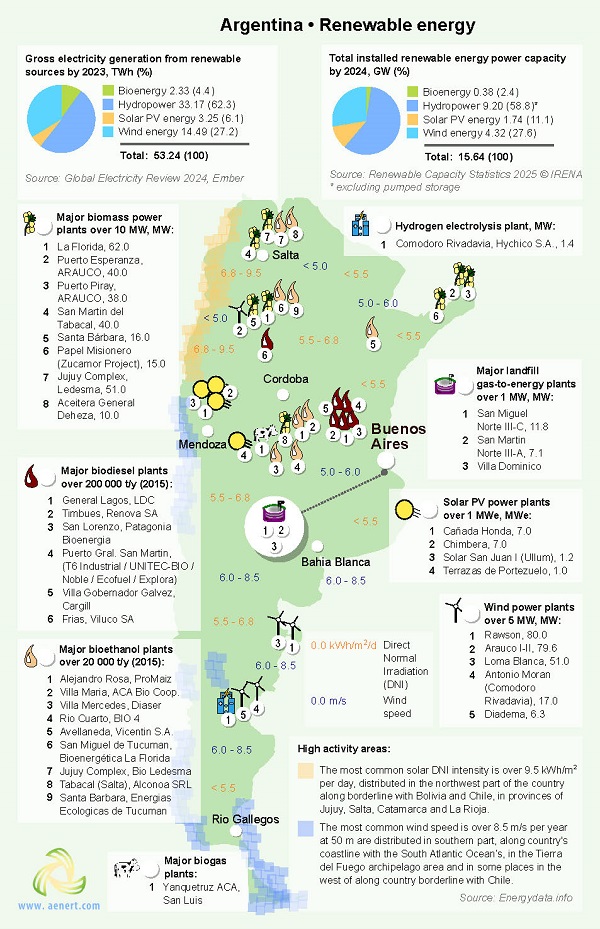
Argentina’s Patagonian wind belt — stretching from Neuquén through Río Negro, Chubut, and Santa Cruz — delivers capacity factors of 45–60% for well-sited projects, among the highest onshore wind resources globally. The Loma Blanca wind complex (608 MW, Neuquén), the wind farms of Chubut’s Atlantic coast, and the developing pipeline in Santa Cruz represent the scale of Patagonian wind development. Northern Argentina’s NOA (Noroeste Argentino) region — Jujuy, Salta, Tucumán — has GHI exceeding 2,200 kWh/m²/year, making it one of Latin America’s best solar zones.
HOMER Front models Argentine utility-scale project economics: Patagonian wind generation profiles at Atlantic coast capacity factors, northern solar generation at NOA irradiance levels, CAMMESA spot price dispatch, BESS co-location for curtailment management on the Patagonia transmission corridor, and the economics of MATER bilateral PPA structures for large industrial consumers. Grid connection constraints — particularly the Patagonian 500 kV transmission corridor which is frequently congested during peak wind periods — require curtailment modelling that HOMER Front addresses through probabilistic dispatch analysis.
Ley 27.424 distributed generation — HOMER Grid
Ley 27.424 (Generación Distribuida de Energía Renovable, 2017) established Argentina’s national distributed generation framework, creating the prosumer (usuario-generador) status for residential, commercial, and industrial consumers who install eligible renewable generation and connect to the distribution grid under a net metering or net billing scheme. Provincial implementation has been uneven — Buenos Aires province, Córdoba, Mendoza, Santa Fe, and CABA have the most developed regulatory frameworks — but the national law provides the baseline commercial structure.
HOMER Grid models Argentine C&I distributed generation systems: rooftop solar against EDENOR, EDESUR (Buenos Aires), EPEC (Córdoba), and other distribution utility tariff structures with time-of-use demand charges, BESS sizing for self-consumption maximisation where net billing displaces full net metering, and the economics of solar-only versus solar-BESS systems under Argentina’s evolving distributed generation tariff framework. Inflation-indexed peso tariffs and USD-denominated equipment costs create a specific multi-currency optimisation that HOMER Grid’s scenario analysis handles.
Vaca Muerta and Patagonian remote operations — HOMER Pro
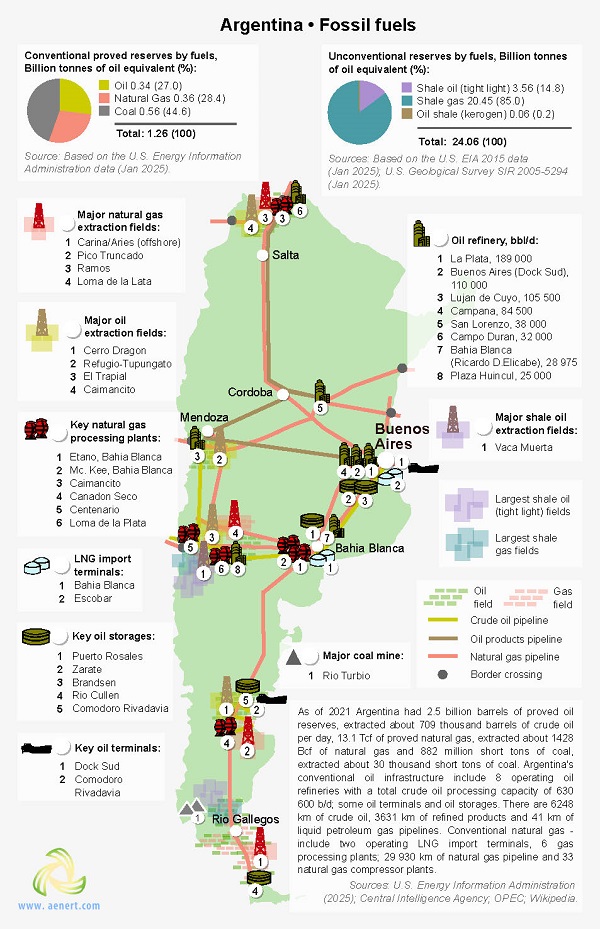
The Vaca Muerta shale formation in Neuquén province is South America’s largest unconventional oil and gas resource — operated by YPF, Shell, TotalEnergies, Pan American Energy, and others. Oil and gas extraction operations in remote Neuquén, the Andean foothills, and offshore Patagonia depend on diesel generation where gas pipeline connections are not available. Patagonian wind at these sites can achieve capacity factors that transform the diesel displacement economics.
HOMER Pro models Argentine remote and off-grid power systems: wind-diesel-BESS hybrid configurations for oil and gas field operations in Vaca Muerta and the Patagonian steppe, solar-wind-battery microgrids for isolated Andean communities in Neuquén, Mendoza, and Jujuy provinces, and the economics of diesel displacement at the world-class Patagonian wind sites. Isolated Andean communities — the Mapuche and Tehuelche communities of southern Patagonia — are among the contexts where HOMER Pro’s off-grid simulation framework is directly applicable.
Argentine market context
CAMMESA (Compañía Administradora del Mercado Mayorista Eléctrico)
Administers Argentina’s wholesale electricity market and serves as offtaker for RenovAr PPAs. Dispatches generation against the SADI (Sistema Argentino de Interconexion). The spot price (precio spot) is the primary dispatch reference for HOMER Front modelling in Argentina.
RenovAr (Programa RenovAr)
Argentina’s 2016–2019 renewable energy auction programme. Contracted approximately 4.7 GW of solar and wind capacity under 20-year USD-denominated PPAs with CAMMESA as offtaker. World Bank MIGA political risk guarantees underpin the payment structure.
MATER (Mercado a Término de Energías Renovables)
Bilateral renewable energy contracting market for large consumers above 300 kW with renewable energy obligations under Ley 27.191. Allows direct generator-to-consumer PPAs outside the CAMMESA regulated structure.
Ley 27.424 (Generación Distribuida)
National distributed generation law establishing prosumer status for residential and C&I consumers. Governs net metering and net billing for distributed renewable generation connected to the distribution grid. Provincial implementation varies.
Foundational HOMER references
View full bibliography →HOMER is used for energy projects in Argentina and over 190 countries worldwide. Its modelling methodology — developed at the U.S. National Renewable Energy Laboratory (NREL) — is documented in these foundational references. Browse the full bibliography for 1,000+ applied studies.
-
Computer Modeling of Renewable Power Systems
Lilienthal, P.D., Lambert, T.W. & Gilman, P. (2004). Encyclopedia of Energy, NREL Report CH-710-36771.
-
Using HOMER Software, NREL's Micropower Optimization Model, to Explore the Role of Gen-sets in Small Solar Power Systems (Case study: Sri Lanka)
Givler, T. & Lilienthal, P. (2005). NREL/TP-710-36774.
-
Review of software tools for hybrid renewable energy systems
Sinha, S. & Chandel, S.S. (2014). Renewable and Sustainable Energy Reviews, vol. 32.
Ready to model your Argentina project?
Whether you’re modelling a Patagonian wind project against CAMMESA spot prices, optimising a C&I Ley 27.424 installation, or designing a wind-diesel hybrid for a Vaca Muerta operation, HOMER gives you the rigorous analysis your investors require.