Latin America — Brazil
HOMER software for energy projects in Brazil
Brazil's Lei 14.300/2022 created Latin America's most detailed distributed generation framework. ANEEL's Resolução 482 governs net metering. A-4 and A-6 capacity auctions and Reserva de Capacidade procurements drive utility-scale investment. The Amazon's Sistemas Isolados — 200 isolated grids serving 1.5 million people — represent Brazil's most active off-grid electrification challenge.
Brazil's energy modelling context
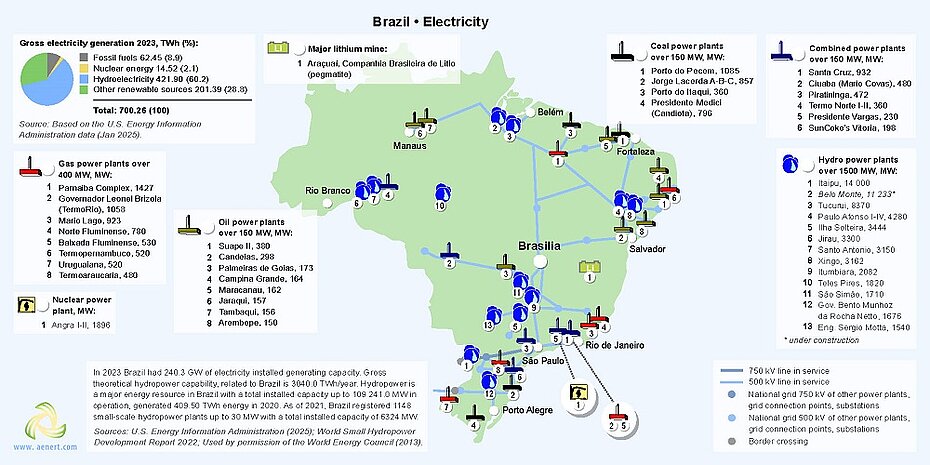
ANEEL (Agência Nacional de Energia Elétrica) regulates Brazil's electricity sector — setting distribution tariffs, net metering rules (Resolução Normativa 482 and its successors), and overseeing the concession framework for utilities and generators. ONS (Operador Nacional do Sistema Elétrico) dispatches the interconnected SIN (Sistema Interligado Nacional) — the Brazilian grid covering over 90% of the country. CCEE (Câmara de Comercialização de Energia Elétrica) operates the wholesale electricity market, including the A-4 and A-6 capacity auctions.
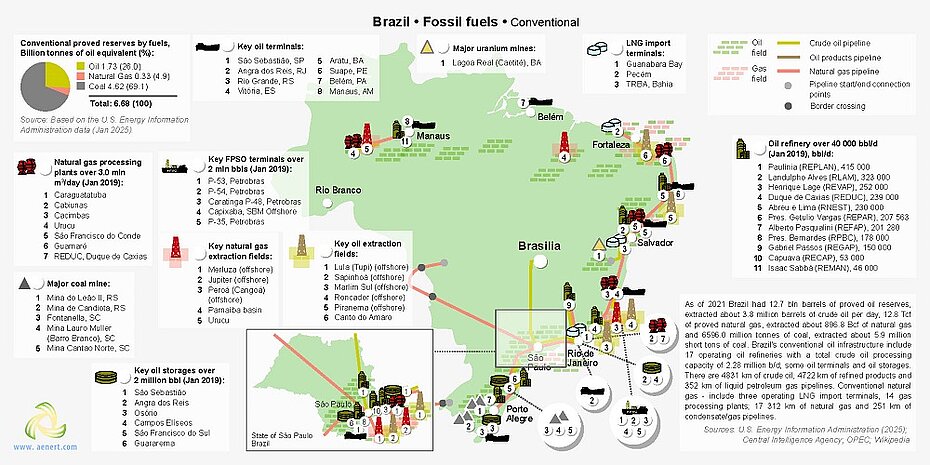
Brazil's electricity matrix is among the cleanest in the world — approximately 83% of total generation comes from hydro, wind, biomass, and solar. However, multi-year droughts increasingly stress the hydro-dependent system, creating price spikes and curtailment risk that make storage and distributed generation economically compelling beyond their environmental value.
Lei 14.300/2022 (the Marco Legal da Micro e Minigeração Distribuída) consolidated and expanded Brazil's distributed generation framework — clarifying net metering rules, enabling GD compartilhada (shared generation for groups of consumers, cooperatives, condominiums), and providing a transition path for the shift from full net metering to net billing for new systems.
Geração distribuída and GD compartilhada
Brazil's distributed generation market has grown from near zero in 2012 to over 25 GW installed capacity by 2024 — driven by ANEEL Res. 482 net metering and the subsequent evolution under Lei 14.300. HOMER Grid models Brazilian distributed generation systems against Brazil's complex tariff structure: concessionária-specific tariffs with TUSD (tariff for distribution system use), TE (energy tariff), and ICMS tax treatment that varies by state.
GD compartilhada — shared generation under Lei 14.300 — allows rural landowners (geração rural remota), cooperatives, condominiums, and energy efficiency service companies (ESCOs) to allocate surplus generation credits among multiple consumer units. HOMER Grid models these allocation structures and the credit management economics across the credit validity window.
A-4/A-6 auctions and Reserva de Capacidade
Brazil's capacity auctions — A-4 (4 years forward) and A-6 (6 years forward) — are the primary mechanism for procuring new generation capacity for the regulated market. Energia de Reserva (reserve energy) auctions target fuel-flexible generation and increasingly battery storage for system adequacy purposes. HOMER Front models co-located renewable-plus-storage assets against Brazilian long-term PPA structures with CCEE contract terms and dispatch obligations.
The Reserva de Capacidade procurement — targeting Brazilian storage to complement the hydro-dominated system during drought periods — creates a specific market for BESS modelled against the SIN's seasonal dispatch patterns and storage activation rules.
Sistemas Isolados — Amazon off-grid
Brazil's Sistemas Isolados comprise approximately 200 isolated electricity systems — predominantly in the Amazon region (Amazonas, Pará, Roraima, Amapá, Rondônia, Acre) — serving about 1.5 million people. These systems are diesel-dependent, supplied by river barge in some cases and by daily air freight in the most remote locations. Eletrobras and its state-level subsidiaries (Amazonas Energia, Eletroacre) operate most of these systems.
The Luz Para Todos (Light for All) programme and subsequent social tariff programmes have electrified most of the Amazon basin. The current policy focus is decarbonisation — replacing diesel with solar, biogas from organic waste, and small hydro where river resources permit. HOMER Pro models these isolated Amazon systems: diesel generation dispatch, solar resource from INMET and SINDA data, and battery storage sizing under the extreme logistics cost of diesel delivery in the Amazon.
Selected HOMER research in Brazil
View full bibliography →Peer-reviewed studies that used HOMER to model energy systems in Brazil, drawn from the HOMER bibliography of 1,000+ publications.
-
Subtle Influence of the Weibull Shape Parameter on HOMER Optimization Space of a Wind-Diesel Hybrid Gen Set for Use in Southern Brazil
Beluco, A., Benevit, M., Gewehr, A. & Silva, J. (2016). Journal of Power and Energy Engineering, vol. 4.
-
Economic Evaluation and Optimization of a Photovoltaic-fuel cell-batteries Hybrid System for Use in the Brazilian Amazon
Silva, S.B., de Oliveira, M.A.G. & Severino, M.M. (2010). Energy Policy, vol. 38(11).