Asia-Pacific — Philippines
HOMER software for energy projects in the Philippines
The Philippines pays some of Asia's highest industrial electricity tariffs and operates hundreds of isolated island grids across 7,000+ islands. The Green Energy Auction Programme, WESM expansion to the Visayas and Mindanao, and aggressive C&I solar adoption make this one of Southeast Asia's most active energy transition markets.
The Philippine energy market
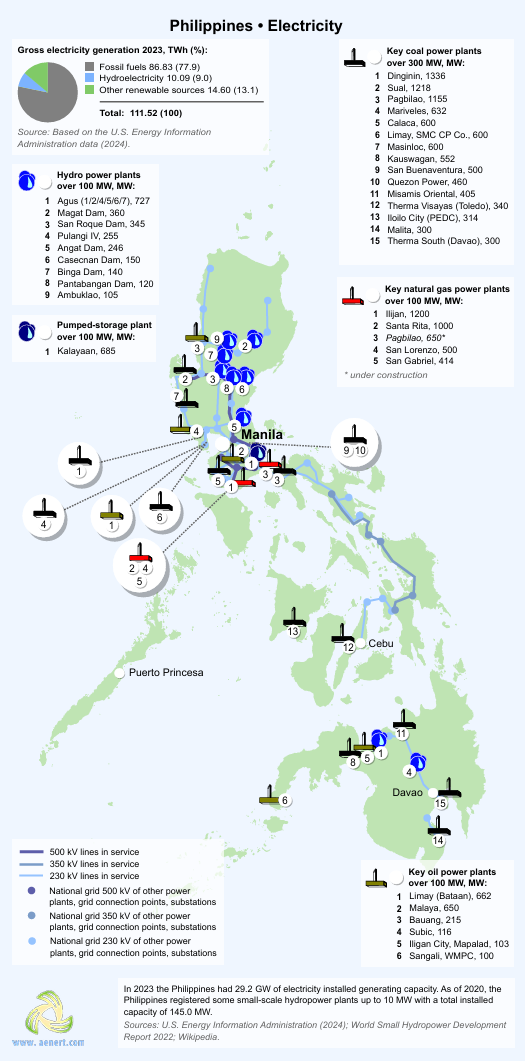
The Philippines operates a liberalised electricity market under EPIRA (Electric Power Industry Reform Act, Republic Act 9136). IEMOP (Independent Electricity Market Operator of the Philippines) administers WESM (Wholesale Electricity Spot Market), which covers Luzon and Visayas; Mindanao integration is underway. DOE (Department of Energy) sets policy, including the renewable energy targets and the GEAP (Green Energy Auction Programme). ERC (Energy Regulatory Commission) governs tariffs and market rules.
Distribution utilities — Meralco in Metro Manila (a private conglomerate), Visayas Electric Company, and numerous rural electric cooperatives — purchase from WESM and through bilateral contracts. Retail electricity suppliers (RES) can serve contestable customers above 750 kW. The Green Energy Option Programme (GEOP) allows large consumers to opt in to renewable energy supply at market price plus green premium.
Island utilities and off-grid systems — HOMER Pro
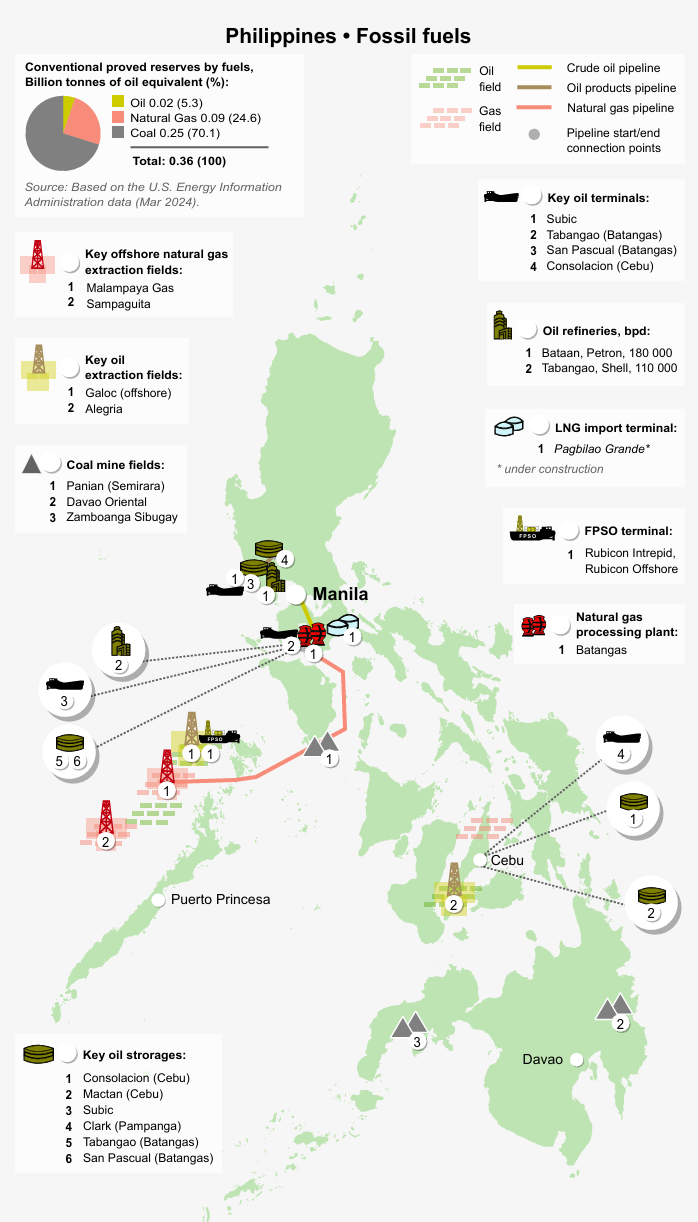
The Philippines has approximately 500 inhabited islands with their own electricity systems, many served by isolated diesel generators operated by rural electric cooperatives (RECs) under the National Electrification Administration (NEA). Electricity costs on these islands frequently exceed PHP 25–40/kWh, compared to PHP 9–12/kWh in Manila. Solar-diesel-battery hybrid systems can reduce these costs by 40–60% while improving reliability.
DOE's Small Island Grids programme and ADB's Community-Based Renewable Energy projects have made HOMER Pro a standard tool for Philippine island electrification feasibility studies. The Mindanao grid — historically isolated from Luzon and Visayas, with high dependence on diesel in the ARMM (Bangsamoro) region — and the Palawan island chain present particular challenges that HOMER Pro's multi-source dispatch modelling is designed to address.
C&I solar and behind-the-meter — HOMER Grid
The Philippines' high industrial electricity tariffs — among Asia's highest at PHP 8–14/kWh depending on utility and demand classification — make behind-the-meter solar one of Southeast Asia's strongest business cases. Meralco's commercial and industrial rates include significant demand charges that HOMER Grid's demand charge reduction modelling captures in full.
The Green Energy Option Programme (GEOP) allows contestable customers to choose their RE supplier. HOMER Grid models GEOP procurement economics alongside rooftop solar PV and BESS, determining the optimal combination of self-generation and GEOP supply to minimise total electricity cost. BPO (Business Process Outsourcing) offices, manufacturing in the PEZA (Philippine Economic Zone Authority) export zones, and data centres in Metro Manila and Cebu are the primary C&I segments.
GEAP utility-scale auctions — HOMER Front
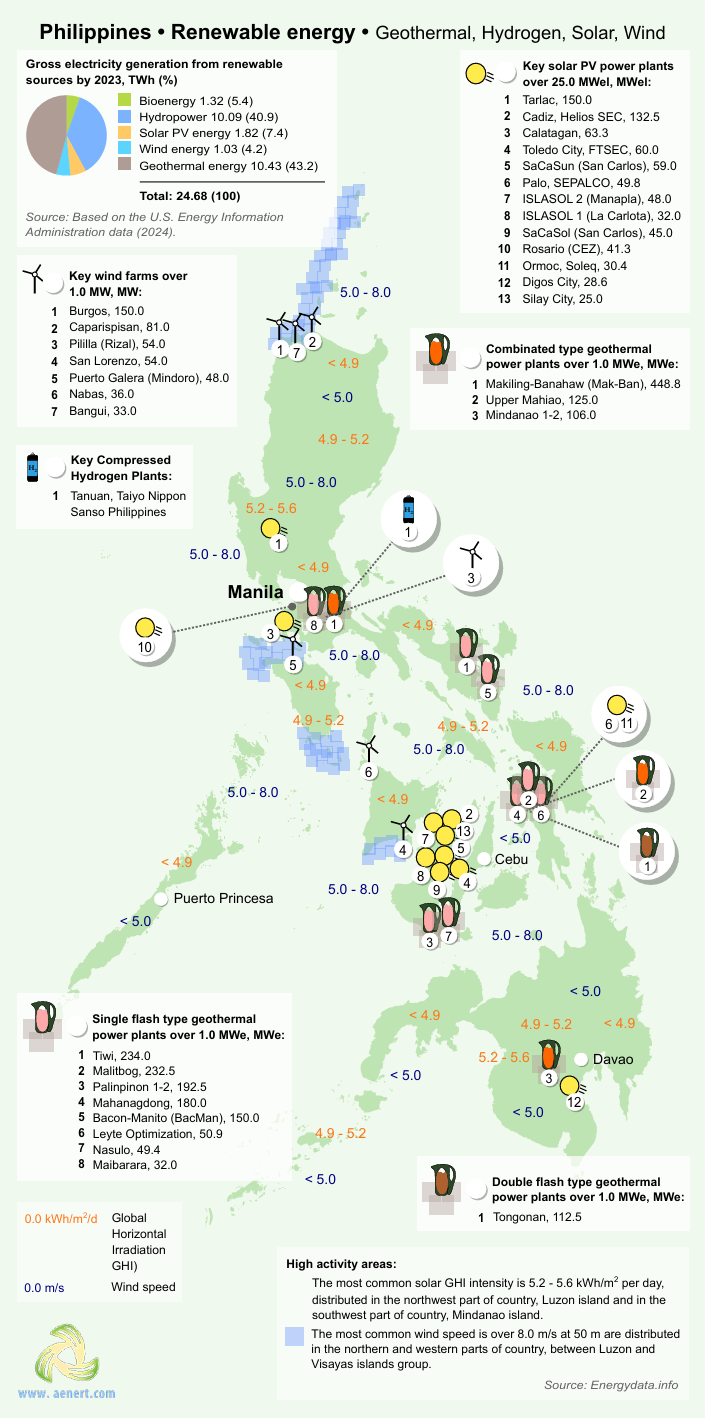
The Green Energy Auction Programme (GEAP) is DOE's primary mechanism for procuring new renewable capacity. GEAP auctions set 20-year offtake contracts for solar, wind, run-of-river hydro, and biomass projects. Rounds 1 (2022) and 2 (2023) awarded a combined 3.5 GW. BESS co-location requirements are increasing as WESM seeks firming capacity alongside variable renewable generation.
HOMER Front models GEAP project economics: solar and wind generation profiles using Philippine solar irradiance and wind data, WESM spot price revenue stacking, capacity payment structures under the must-offer rule, and BESS co-location sizing for maximum GEAP auction competitiveness. IPPs and EPCs bidding into GEAP auctions use HOMER Front to optimise their bid price against generation profile assumptions.
Philippine market context
DOE (Department of Energy)
Sets energy policy, administers GEAP auctions, and issues service contracts for renewable energy development. Primary regulatory contact for utility-scale project developers.
IEMOP / WESM
Independent Electricity Market Operator of the Philippines administers the Wholesale Electricity Spot Market. WESM operates on Luzon and Visayas; Mindanao integration is in progress.
ERC (Energy Regulatory Commission)
Governs distribution utility tariffs, WESM market rules, and interconnection standards. ERC approval is required for retail electricity supply licences and distribution utility rate changes.
NEA (National Electrification Administration)
Oversees rural electric cooperatives (RECs) that serve off-grid and rural communities. Primary counterparty for island electrification projects under the Small Island Grids programme.
Selected HOMER research in the Philippines
View full bibliography →A peer-reviewed study that used HOMER to model off-grid solar for island agricultural operations in the Philippines, drawn from the HOMER bibliography of 1,000+ publications.
-
Performance Evaluation of a Micro Off-Grid Solar Energy Generator for Islandic Agricultural Farm Operations Using HOMER
Querikiol, E.M. & Taboada, E.B. (2018). Journal of Renewable Energy, vol. 2018. (University of San Carlos, Cebu)
Ready to model your Philippine project?
Whether you're designing an island hybrid system for a rural electric cooperative, a C&I solar installation in Meralco territory, or bidding into a GEAP auction, HOMER gives you the techno-economic analysis your counterparties require.