Asia-Pacific — India
HOMER software for energy projects in India
India is the country where all three HOMER products see active large-scale use: HOMER Pro across the world's largest mini-grid market and 600,000 telecom tower sites; HOMER Grid for C&I open access solar and FAME II EV charging depots; HOMER Front for SECI VGF-BESS and utility-scale storage auctions.
India's energy modelling landscape
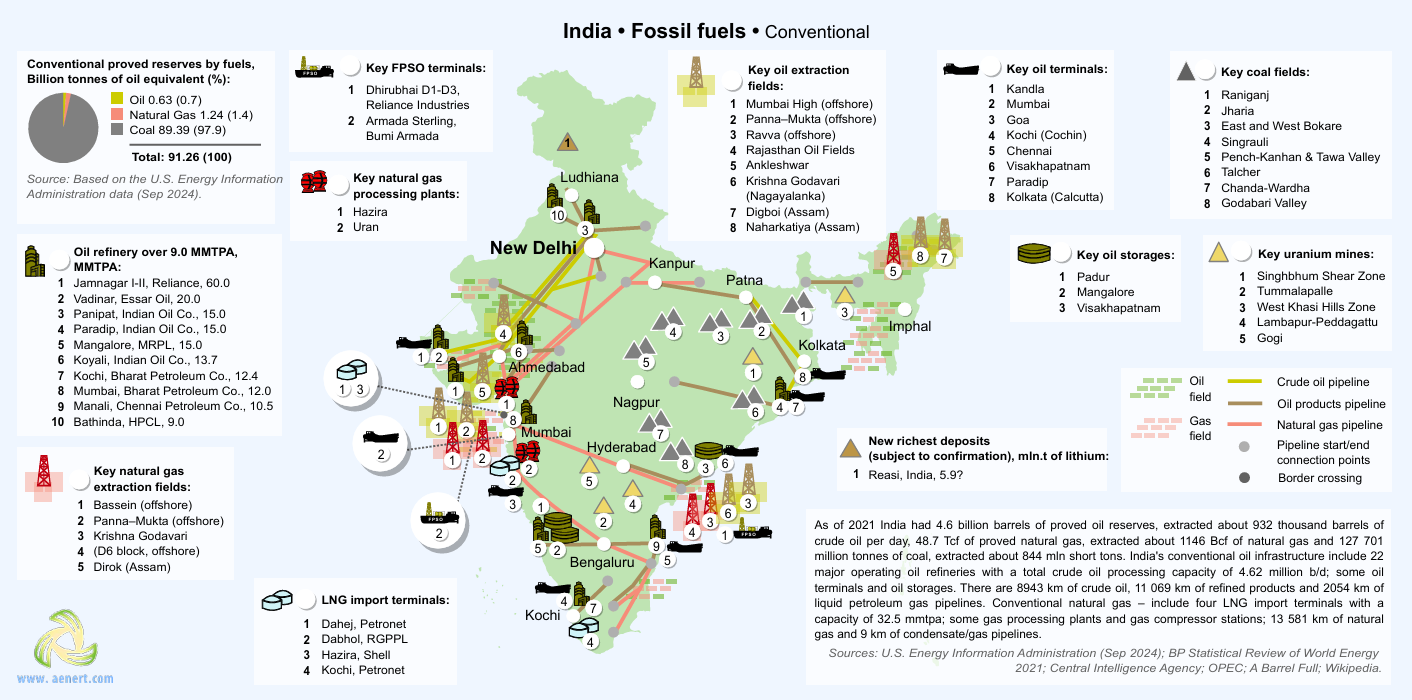
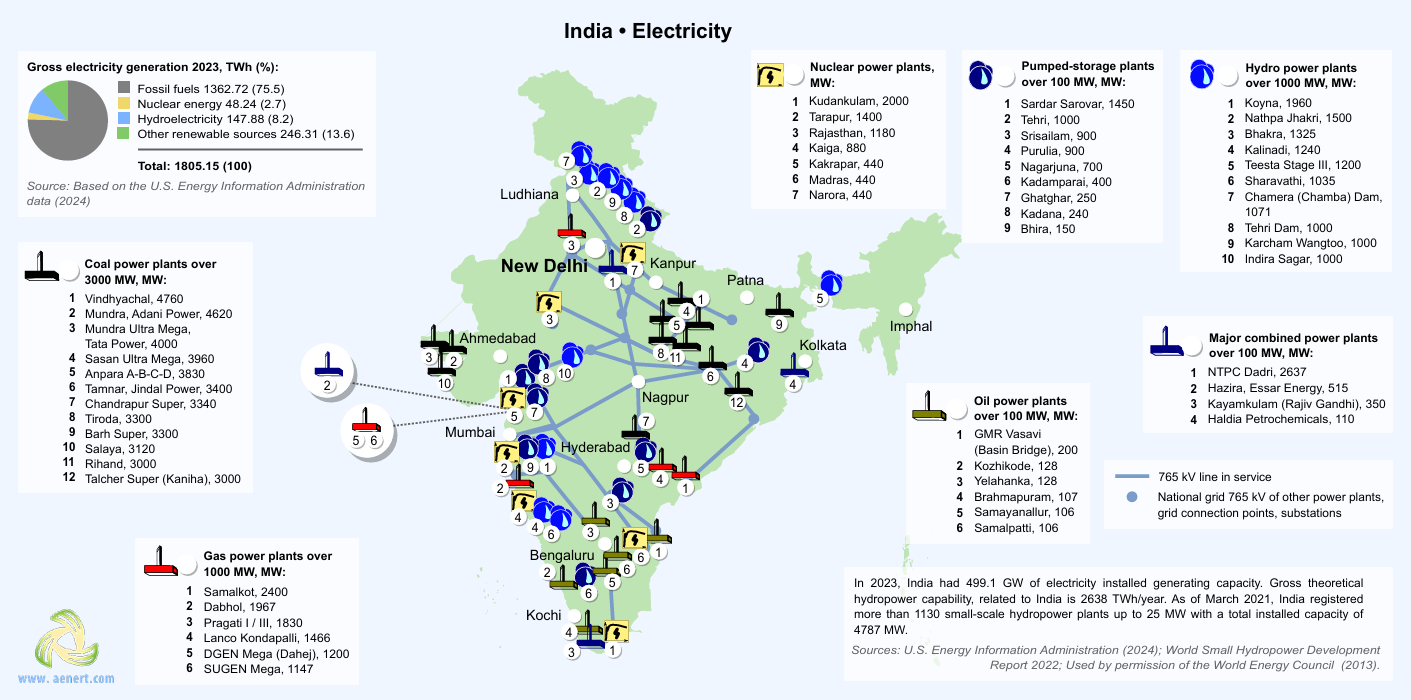
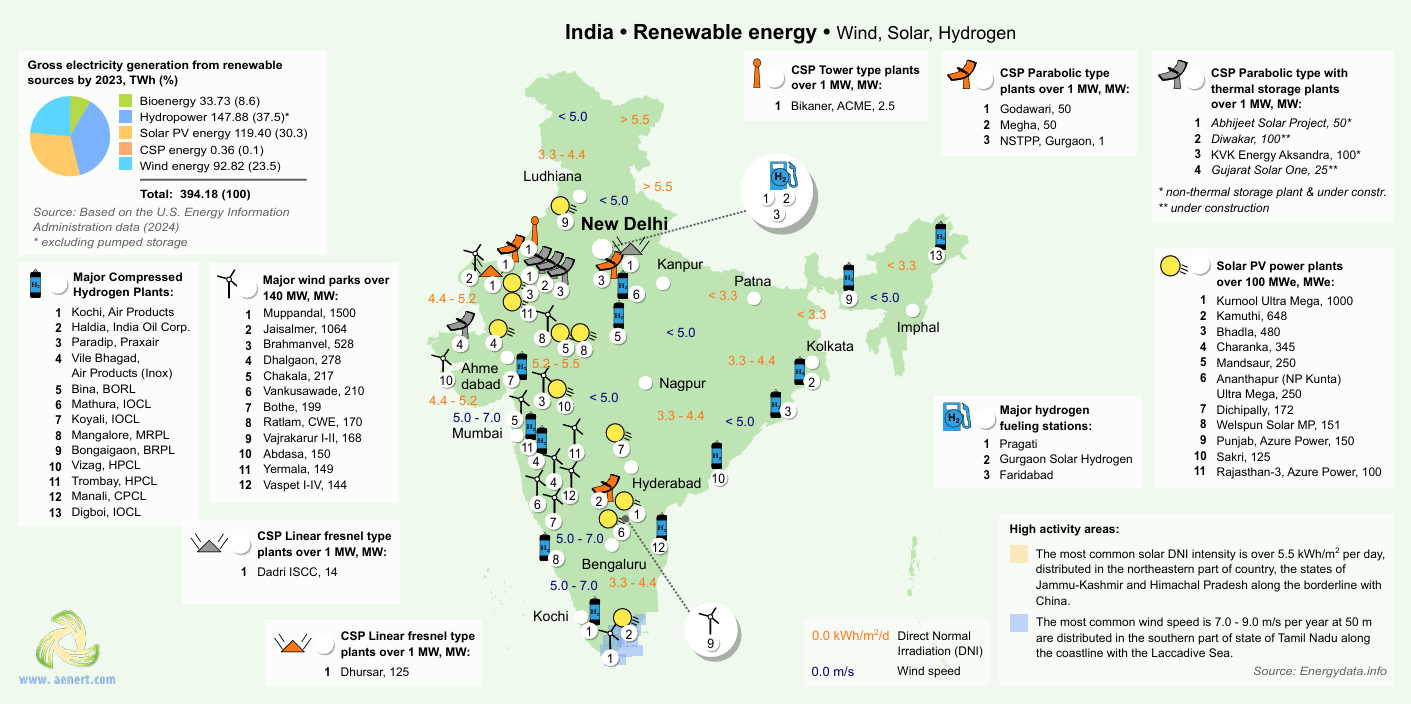
India is the world's third-largest electricity market, with approximately 85 GW of operational solar, 47 GW of wind, 47 GW of large hydro, and a fast-growing utility-scale BESS pipeline — multi-GWh under SECI tender as of 2024. The 500 GW non-fossil installed capacity target by 2030 — adopted at COP26 and carried forward in subsequent NDC submissions — drives auction volumes that make India one of the world's most active markets for energy modelling expertise.
MNRE (Ministry of New and Renewable Energy) sets renewable energy targets and administers subsidy programmes. SECI (Solar Energy Corporation of India) is the central procurement agency for most national-level renewable and storage auctions — including the VGF-BESS (Viability Gap Funding for Battery Energy Storage Systems) programme. CERC (Central Electricity Regulatory Commission) sets inter-state tariff and market rules; state electricity regulatory commissions (SERCs) govern intra-state distribution. Grid-India (formerly POSOCO) operates the National Load Dispatch Centre and the five Regional Load Dispatch Centres; IEX (Indian Energy Exchange) clears day-ahead, real-time, and term-ahead wholesale markets.
India's power sector is structurally complex: state DISCOMs (distribution companies) of widely varying financial health serve the retail market, while large C&I consumers can bypass DISCOMs through open access — direct purchase from generators through the inter-state or intra-state transmission system. C&I open access solar has grown rapidly as DISCOM tariffs have risen, with state SERC wheeling charges, banking provisions, and cross-subsidy surcharges determining project economics on a state-by-state basis.
Last reviewed: May 2026. MNRE policy, SECI auction terms, state SERC open access regulations, and DISCOM tariffs change frequently. Verify current programme parameters before relying on figures cited here.
Mini-grids, rural electrification, and PM-KUSUM — HOMER Pro
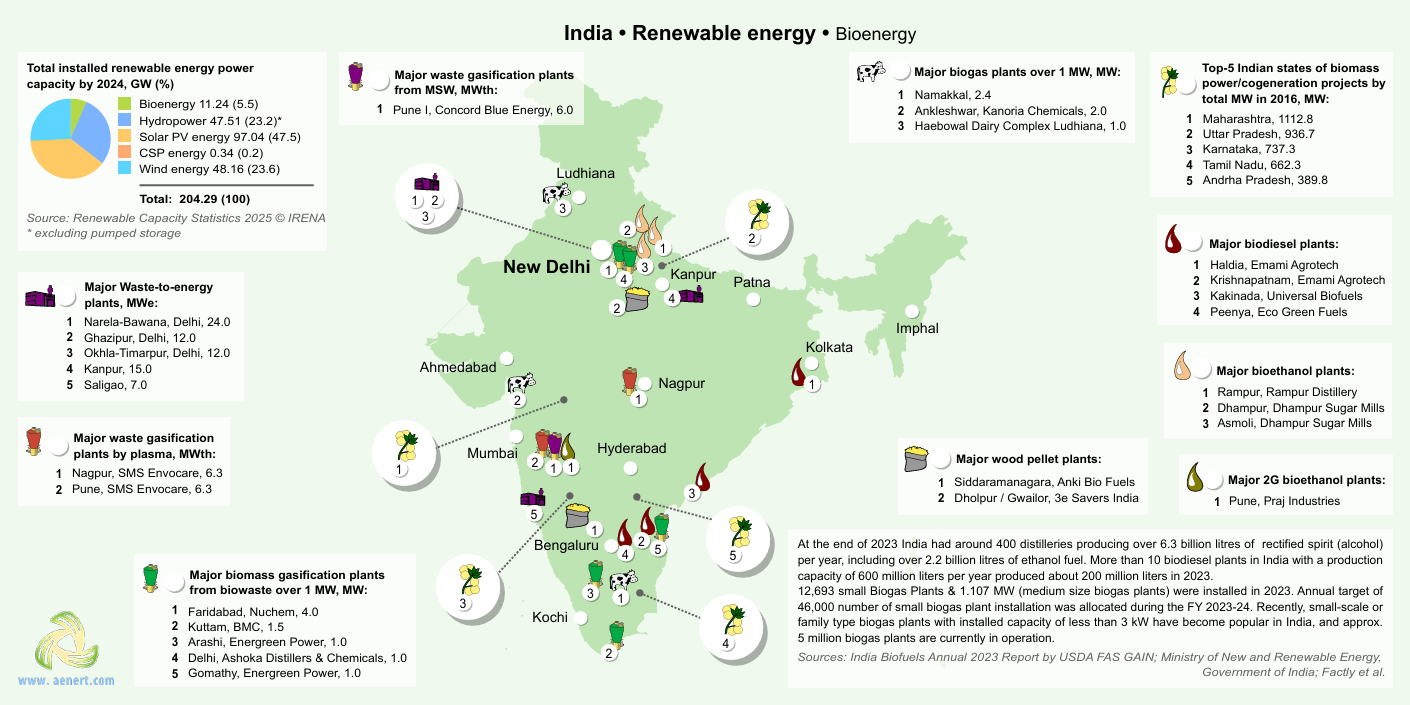
India's rural electrification challenge — connecting villages to reliable power where grid extension is uneconomic — has made it the world's largest mini-grid market by project count. The MNRE Mini-Grid Policy 2016 and subsequent state-level frameworks created a regulated tariff structure for developer-owned mini-grids. RESCOs (Renewable Energy Service Companies), Husk Power Systems, Tata Power Solar Microgrids, and international developers operate hundreds of mini-grid sites across Bihar, Uttar Pradesh, Jharkhand, Odisha, and Rajasthan.
HOMER Pro is the reference tool for these systems. It sizes solar PV, battery storage, and diesel back-up against village-level load profiles, applies the regulated tariff schedules set under MNRE or state SERC frameworks, and outputs the LCOE figures required for RESCO concession bids, MNRE subsidy applications, and grant filings to bilateral and multilateral funders (World Bank, ADB, GIZ, USAID).
PM-KUSUM (Pradhan Mantri Kisan Urja Suraksha evam Utthaan Mahabhiyan) subsidises solar pumps for agricultural irrigation and solar installations on agricultural land for DISCOM grid injection. Component B of PM-KUSUM specifically covers standalone solar agricultural pumps — replacing diesel pumps used by smallholder farmers. HOMER Pro models these hybrid solar-diesel pump systems and aggregates fleet-level economics across districts, with subsidy levels calibrated to current PM-KUSUM guidelines.
Telecom tower hybridisation — HOMER Pro
India has approximately 600,000 mobile tower sites, the majority historically powered by diesel generators — making India's telecom tower fleet one of the world's largest sources of stationary diesel fuel consumption. The Department of Telecommunications (DoT) directive on green energy at telecom sites, combined with rising diesel prices and TRAI's renewable energy reporting requirements, has made tower hybridisation (solar-plus-lithium-battery replacement of diesel gensets) one of India's largest distributed energy markets.
HOMER Pro models telecom tower hybridisation at both site and portfolio scale — from individual feasibility analysis to optimisation across thousands of tower locations with different grid reliability profiles, solar irradiance, and diesel logistics costs. Tower infrastructure companies (TowerCos) including Indus Towers, ATC India, and Brookfield's tower portfolios, along with the EPCs that serve them, use HOMER Pro to size and evaluate hybrid tower energy systems and to track diesel displacement across rollouts.
SECI VGF-BESS and grid-scale storage — HOMER Front
SECI's VGF-BESS programme provides viability gap funding for utility-scale battery storage projects, with a multi-GWh procurement pipeline that anchors India's grid-scale storage market. Parallel CERC and state-level Renewable Energy Storage Obligations (RESO and similar storage obligation mechanisms) require DISCOMs and qualifying consumers to source a growing share of energy from storage-coupled renewables, layering additional offtake demand on top of SECI auctions.
HOMER Front is used to model grid-scale BESS projects against India's multi-segment grid: frequency regulation and reserves under Grid-India ancillary service rules, merchant energy arbitrage on IEX day-ahead, real-time, and high-price day-ahead segments, and long-term Battery Energy Storage Purchase Agreement (BESPA) or Power Sale Agreement revenues structured through SECI. Analysts use HOMER Front to evaluate augmentation strategy, degradation across the project lifetime, and revenue stack sensitivity against IEX clearing prices and PSA terms.
C&I open access, BTM solar-plus-storage, and EV charging — HOMER Grid
C&I open access — allowing large consumers to procure directly from renewable generators — has grown rapidly as DISCOM cross-subsidy surcharges have stabilised and Green Open Access Rules (2022) shortened the path to approval. HOMER Grid models C&I open access solar structures: rooftop PPA, ground-mount captive, and third-party sale under state SERC open access regulations. The interaction between open access wheeling charges, banking provisions, cross-subsidy surcharges, and on-site storage determines the optimal project configuration on a state-by-state basis.
Behind-the-meter solar-plus-storage for industrial consumers — particularly those exposed to high HT (High Tension) demand charges and unreliable DISCOM supply — is a growing HOMER Grid use case. The tool sizes BTM PV and battery against HT tariff schedules, models peak shaving against contract demand penalties, and quantifies resilience value during scheduled load shedding and DISCOM outages.
FAME II (Faster Adoption and Manufacturing of Hybrid and Electric Vehicles) and PM e-Bus Sewa subsidise EV charging infrastructure and electric bus deployment across India. HOMER Grid models EV charging hubs — particularly the large charging depots required for electric buses under CESL (Convergence Energy Services Limited) procurement — with on-site solar and storage to reduce peak demand charges under HT tariff structures and to manage simultaneous fast-charging events.
India regulatory and market context
MNRE (Ministry of New and Renewable Energy)
Sets national renewable targets, runs the PM-KUSUM, Rooftop Solar, and Mini-Grid programmes, and administers Production Linked Incentive (PLI) schemes for solar PV and battery cell manufacturing.
SECI (Solar Energy Corporation of India)
Central procurement agency for national renewable and storage auctions, including VGF-BESS, RTC (Round-the-Clock) renewable tenders, FDRE (Firm and Dispatchable Renewable Energy) tenders, and offshore wind tenders.
CERC and state SERCs
CERC regulates inter-state transmission, wholesale market rules, and ancillary services. Each state's SERC sets retail tariffs, open access regulations, wheeling charges, banking rules, and cross-subsidy surcharges — making project economics state-specific.
CEA (Central Electricity Authority)
Technical standards body covering grid code, connection standards, metering, and the national electricity plan. CEA publishes load and capacity projections used in IRP-style planning.
Grid-India and IEX
Grid-India (formerly POSOCO) operates the NLDC and five RLDCs. IEX is the dominant wholesale exchange, clearing the Day-Ahead Market (DAM), Real-Time Market (RTM), Term-Ahead Market (TAM), and the Green DAM/Green TAM segments for RE-attributed power.
DISCOMs and open access
State distribution companies serve the retail market. Large C&I consumers can bypass DISCOMs through open access, with the wheeling, banking, and surcharge regime varying by state — a key driver of where C&I open access solar and BTM storage are most economic.
Explore further
Asia-Pacific overview
HOMER across India, Southeast Asia, Australia, Japan, and Pacific islands
Mini-grid and rural electrification modelling
HOMER Pro for off-grid and weak-grid hybrid systems
Island utility modelling for Asia-Pacific
Lakshadweep, Andaman & Nicobar, and Pacific island grids
Indonesia
PLN, archipelago mini-grids, and coal-displacement projects
Selected HOMER research in India
View full bibliography →Peer-reviewed studies and theses that used HOMER to model off-grid and rural energy systems in India, drawn from the HOMER bibliography of 1,000+ publications.
-
Off-grid electricity generation with renewable energy technologies in India: An application of HOMER
Sen, R. & Bhattacharyya, S.C. (2014). Renewable Energy, vol. 62.
-
Renewable Energy-Based Mini-Grid for Rural Electrification: Case Study of an Indian Village
Sen, R. & Bhattacharyya, S.C. (2014). In Mini-Grids for Rural Electrification of Developing Countries, Springer.
-
Simulation and Optimization of Solar PV-Wind Stand-alone Hybrid System in Hilly Terrain of India
Rawat, R. & Chandel, S.S. (2013). International Journal of Renewable Energy Research, vol. 3(3).
-
Sustainable Energy Generation Using Hybrid Energy System for Remote Hilly Rural Area in India
Rajoriya, A. & Fernandez, E. (2010). International Journal of Sustainable Engineering, vol. 3(3).